
Our Travel Adventures - Cruising Fulltime
In Siam, I Am
Yep—I'm in Siam! Well, what we now know as Thailand. For centuries, this fascinating country was called Siam before officially changing its name to Thailand in 1939. After World War II, it briefly reverted to Siam in 1945, only to adopt the name Thailand permanently in 1949. Whatever you call it, it's a land rich in history, culture, and unforgettable experiences. But before I dive into my adventures here, let's pick up where I left off in my last post.
Travel Log for July 2nd to July 8th, 2026
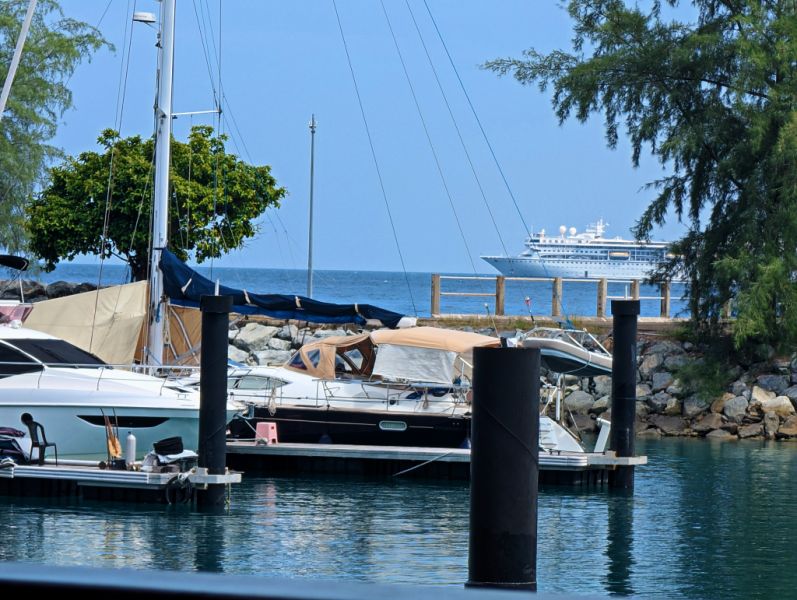
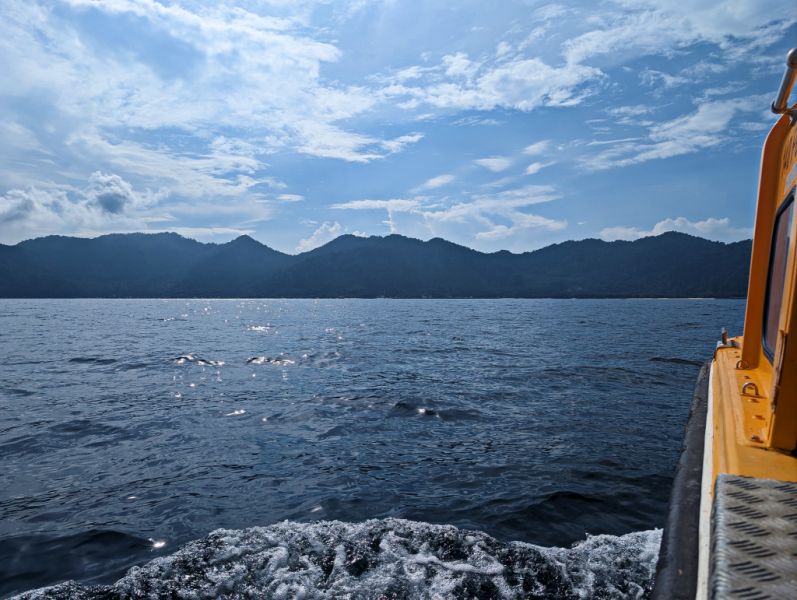
After a couple of relaxing days at sea, we arrived at Tioman Island, Malaysia, on July 4th. Residents of the ship put on a wonderful Independence Day celebration that evening. I got there a little late and missed representing the US Air Force.
I had planned to spend the morning snorkeling with some fellow residents and was looking forward to getting into the water.
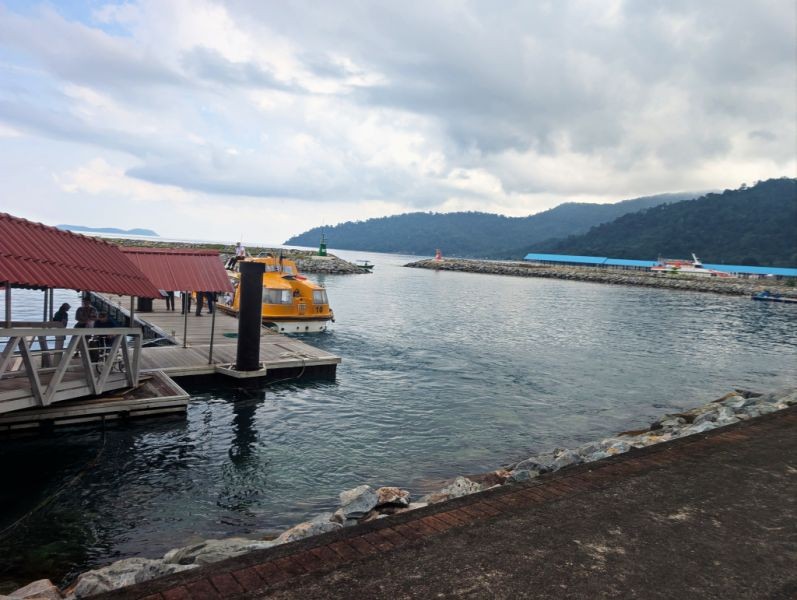
Tioman was one of those ports where the Odyssey couldn't dock directly, so the ship anchored offshore and used tenders to shuttle passengers back and forth. Around noon, as I waited for my tender, an announcement came over the loudspeaker: tender operations had been suspended.
This isn't unusual. Even on relatively calm days, boarding a tender can be a challenge. The small boats rise and fall with the swell, bumping against the side of the ship as passengers carefully step across. Safety always comes first, and when conditions become too rough, operations are halted until the sea settles down.
The captain personally came down to assess the situation before making the final call. After taking a look, his verdict was clear, there was "no way" he was going to allow passengers to board under those conditions.
Although tender service resumed about an hour later, I had already made up my mind to stay aboard. After all, we still had three more days in Tioman, and there was no reason to rush ashore. Sometimes the best travel decision is simply to be patient and wait for a better opportunity.
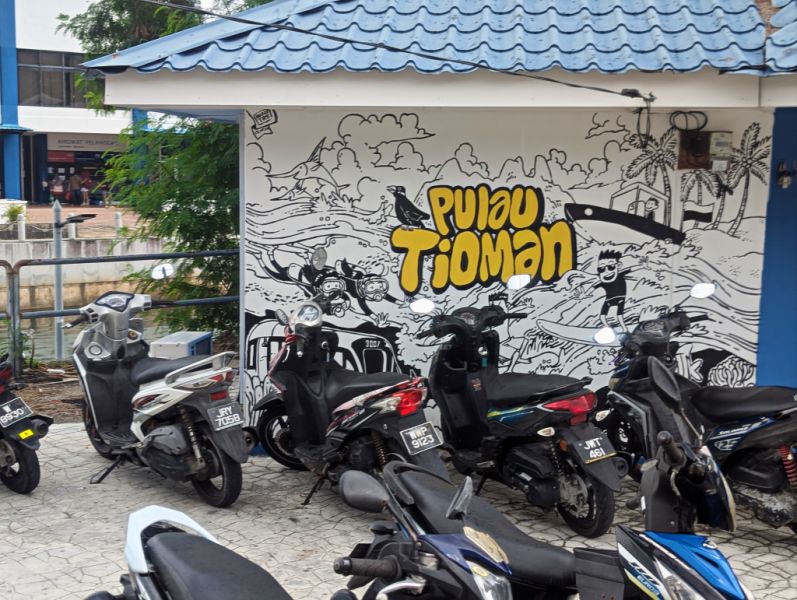
That evening at dinner, a few of us agreed to give it another try the next day. The following morning, seven of us boarded an early tender and headed ashore. Our first stop was the nearest ATM, which also happened to be the island's only ATM.
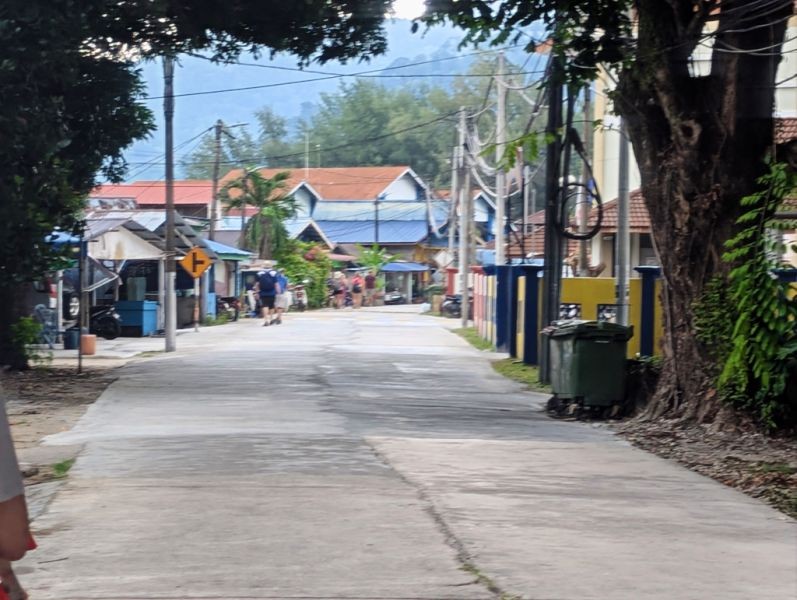
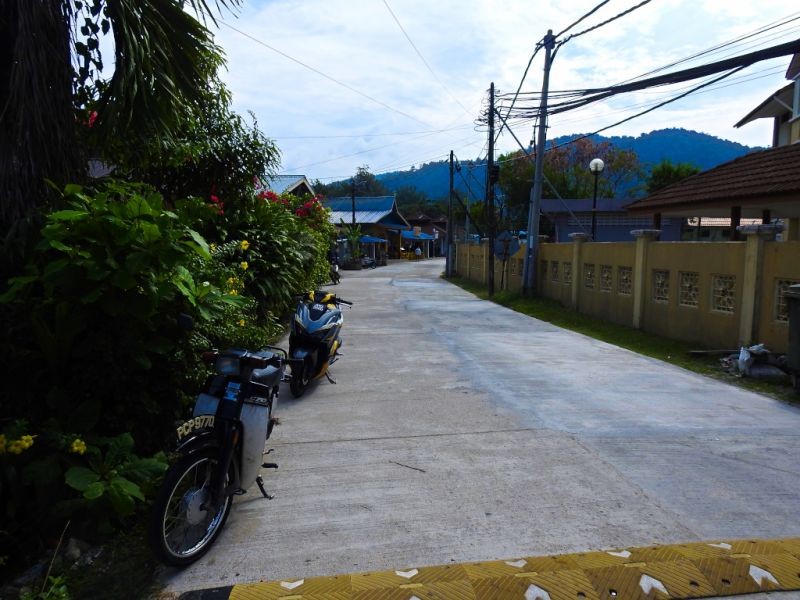
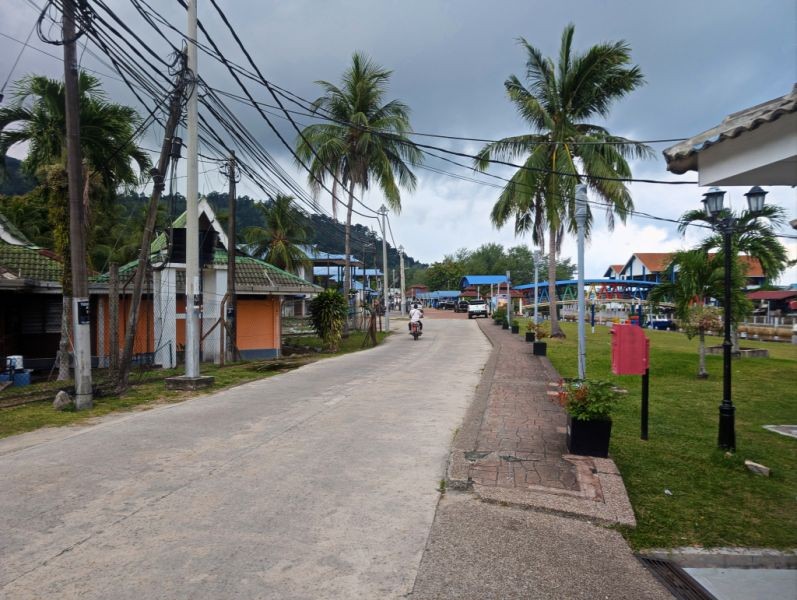
Tioman was the smallest town we had visited so far. Despite its size, it was surprisingly clean, well-kept, and more developed than I had expected. I had no trouble withdrawing Malaysian Ringgit (MYR), but a few others weren't as lucky. One resident intended to withdraw 200 MYR, about $50 USD, but accidentally selected the wrong option and ended up with 800 MYR, closer to $200 USD. At least they wouldn't run short of spending money!
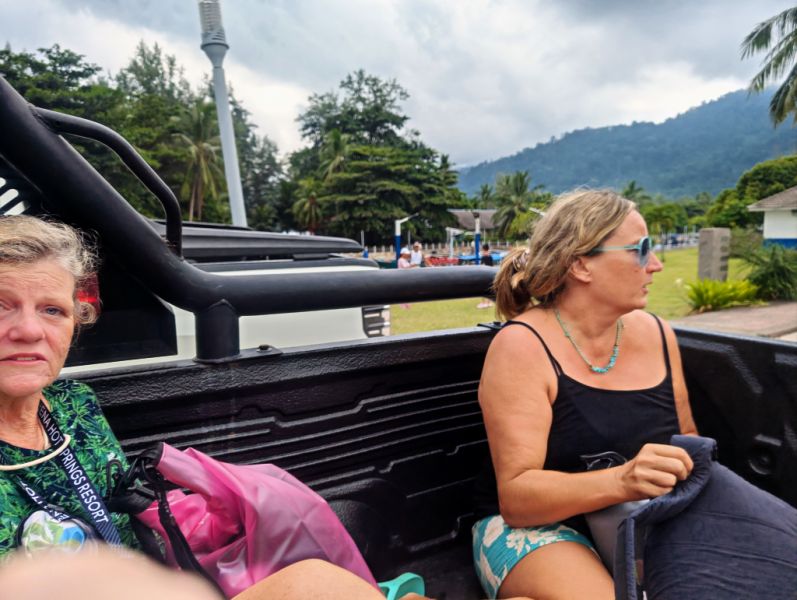
With our wallets stocked and ready for the day, we piled into the back of a pickup truck to continue our journey. On Tioman, taxis come in a slightly different form. The island is small, with only a handful of roads, most of them unpaved, so small pickup trucks serve as the local transportation system.
Technically, we could have walked from the Bandar Bentan Telani Marina to the beach resort we were heading toward. But between the intense tropical heat and the thick humidity, the decision to catch a ride was an easy one. Besides, the fare was only 20 MYR per person, about $5 USD, and the short ride offered a fun glimpse into island life.
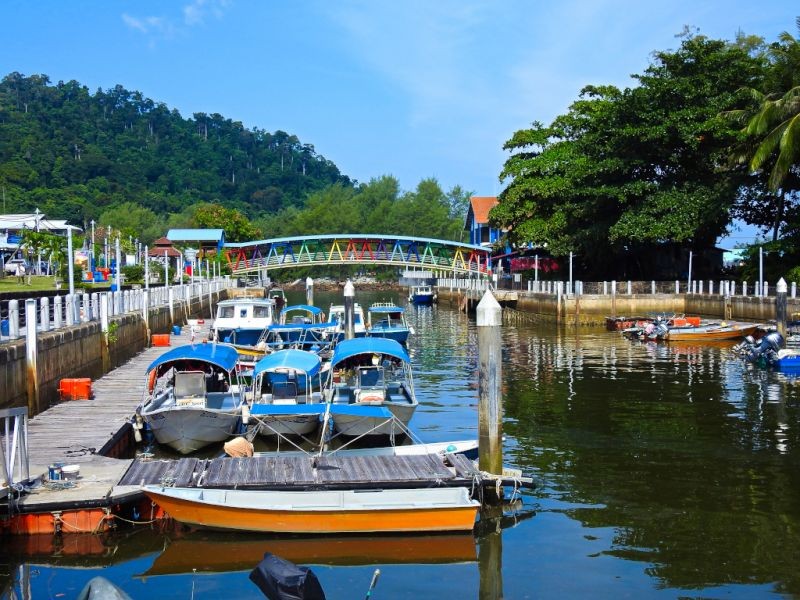
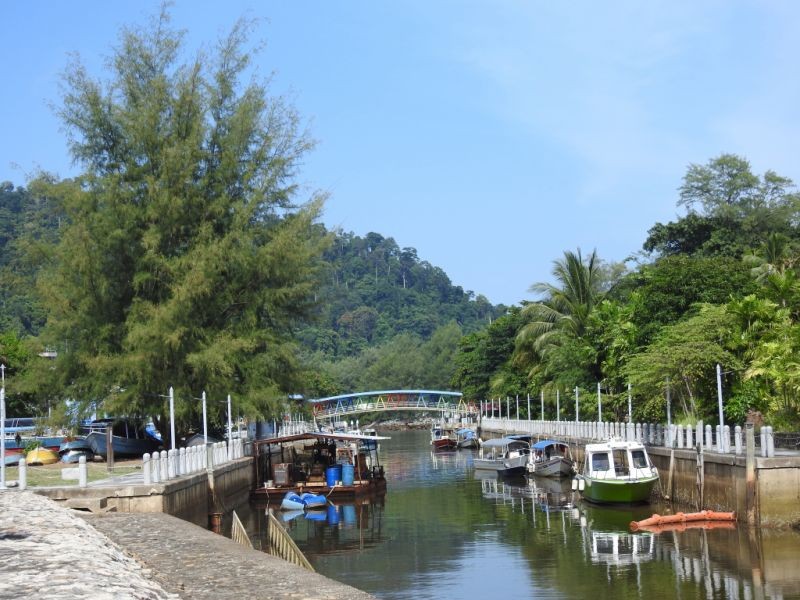
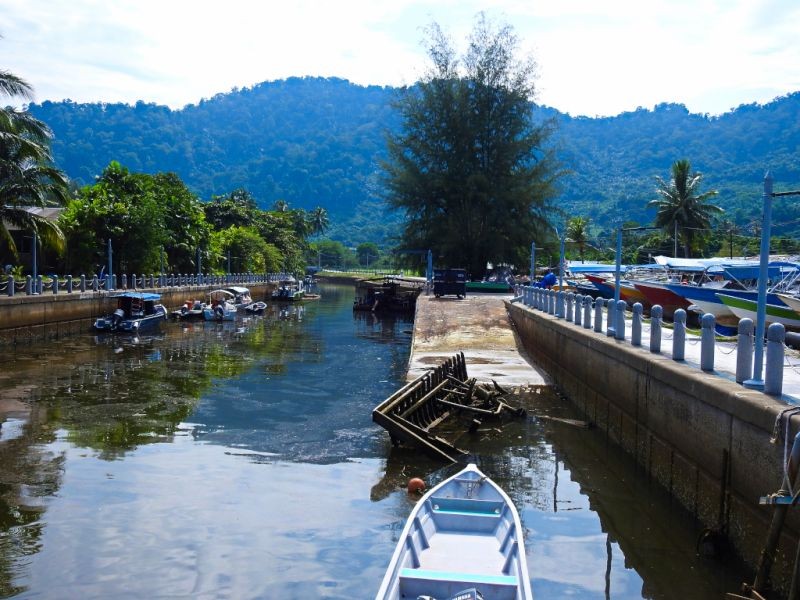
We arrived at a beautiful beachside resort and were shown to its open-air dining area overlooking the water. The resort offered complimentary day access, provided guests purchased food or drinks. No sooner had we settled in with a few cold beverages and snacks than the skies opened up and unleashed a tropical downpour.
Fortunately, we had a spacious beach pavilion all to ourselves, making it an enjoyable place to wait out the storm. We relaxed, watched the rain hammer the ocean, and enjoyed the break until the weather finally cleared.
Once the sun returned, we hopped aboard one of the resort's boats for a short ride to a nearby island for snorkeling. The trip cost 70 MYR, and it was worth every ringgit.
The snorkeling was fantastic. The water was alive with colorful tropical fish, and we were even lucky enough to spot a couple of sea turtles gliding through the reef. While the coral wasn't the most impressive I've seen, the abundance of marine life more than made up for it. I spent about 45 minutes happily swimming among the fish and soaking in the underwater scenery.
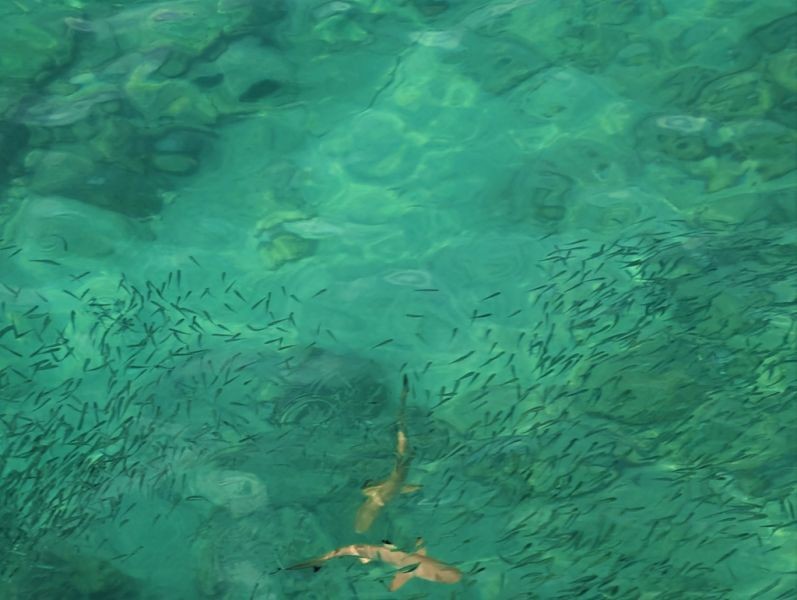
Back at the resort dock, we were greeted by an unexpected sight, more than a dozen Blacktip Reef Sharks cruising through the shallow water. Unfortunately, I had already packed away my snorkeling gear, otherwise I would have jumped right back in. A few people from our group tried to get close, but the sharks quickly darted away whenever anyone approached. At only three to four feet long, these reef sharks are harmless and far more wary of humans than we are of them.
One highlight of the day was finally capturing some great underwater video footage of the experience. With memories, and plenty of photos and video in hand, we caught our boat ride back to the marina and returned to the Odyssey, where a hot shower and dinner were the perfect ending to an excellent day.
A couple of days later, I decided to head back into town. I needed to pick up a few snacks, but I was also curious about something people on the ship had been talking about, the bats. Apparently, they were a local attraction, and I wanted to see them for myself.
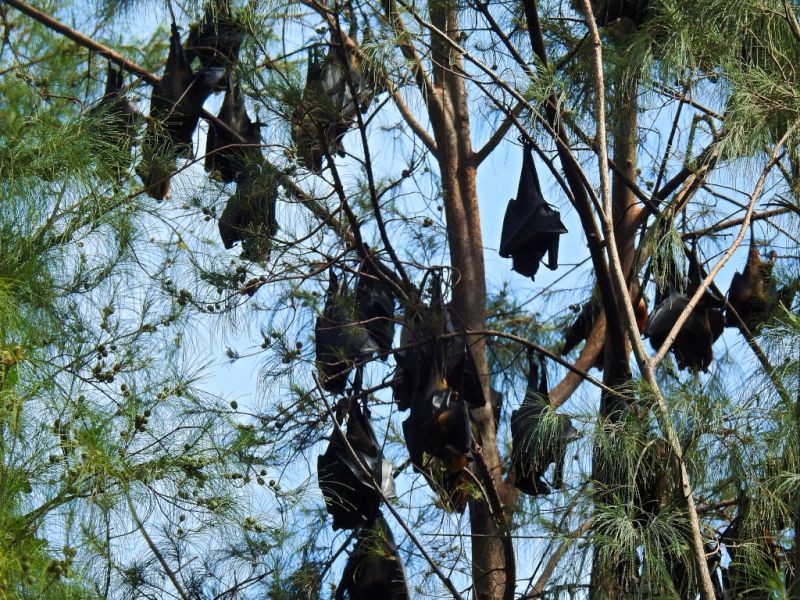
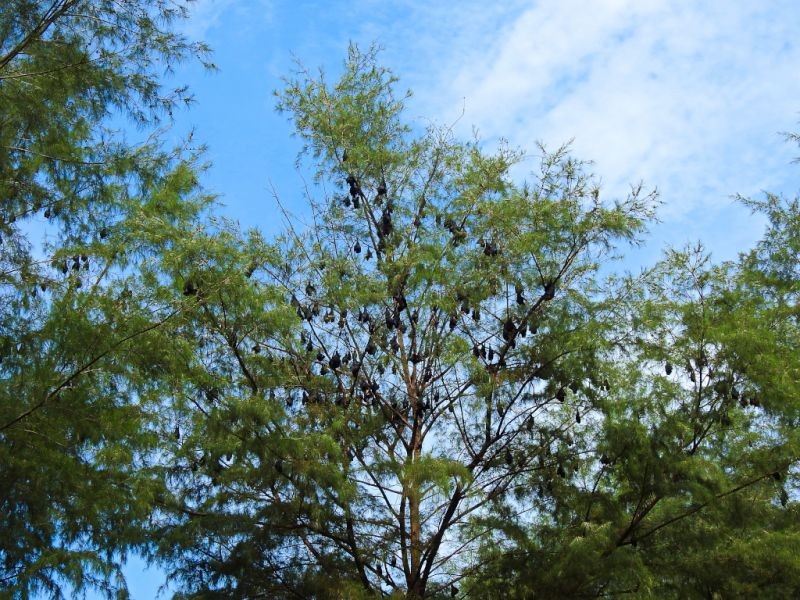
The walk into town was hot and humid, but after about half a mile, I found exactly what everyone had been describing. In fact, it would have been impossible to miss them. I could hear them long before I saw them.
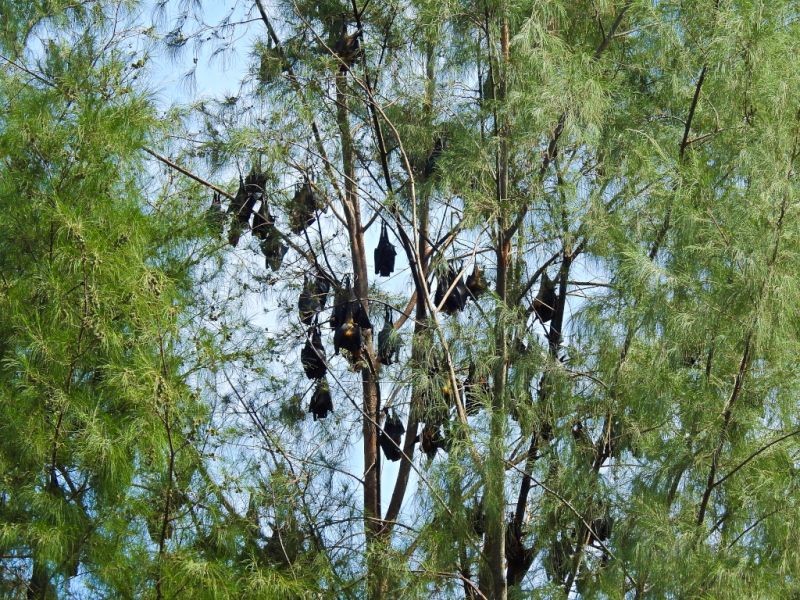
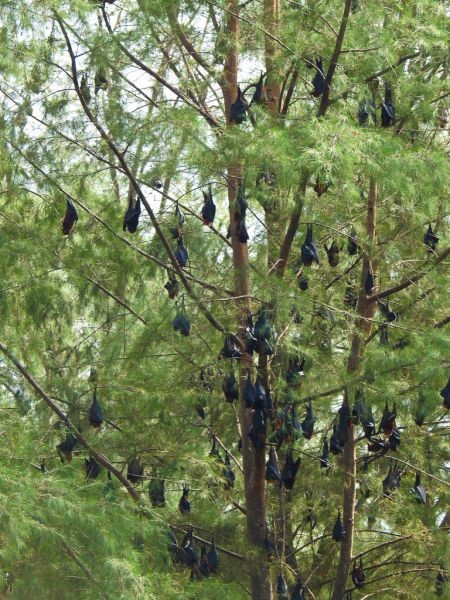
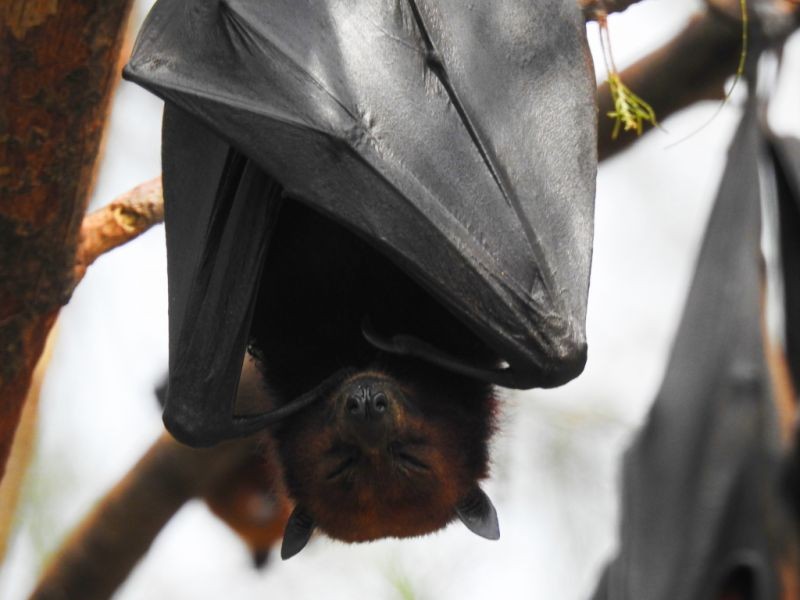
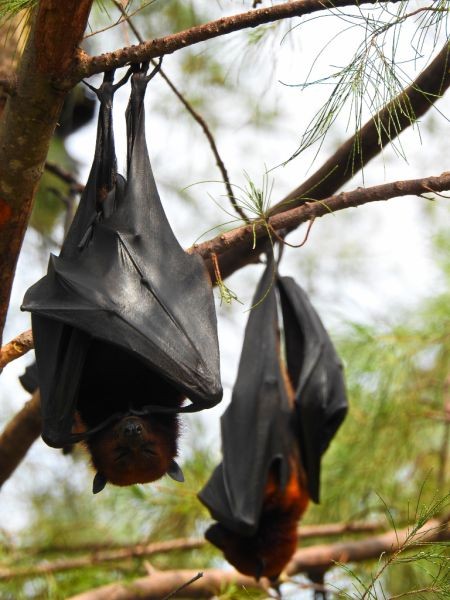
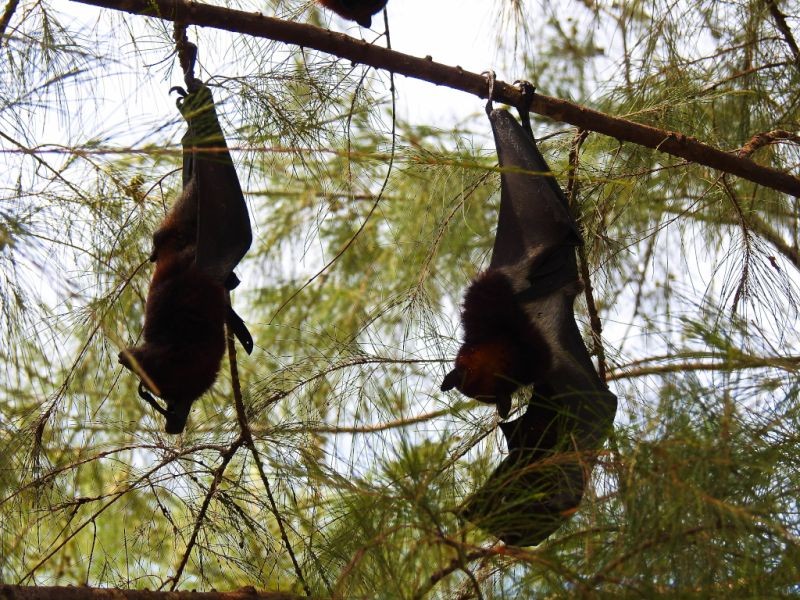
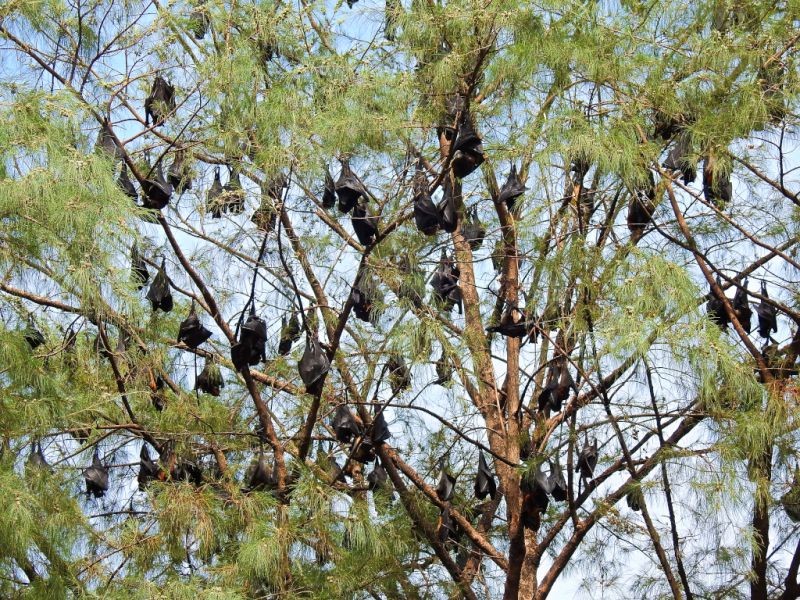
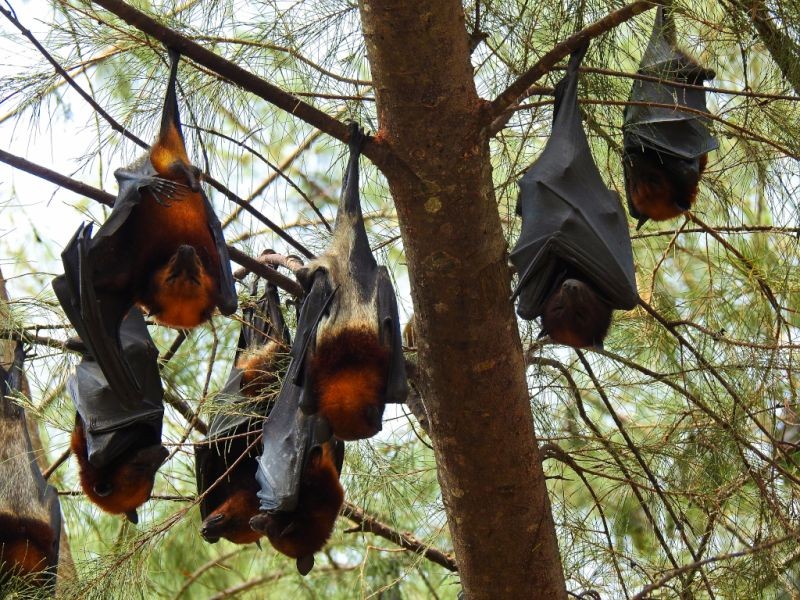
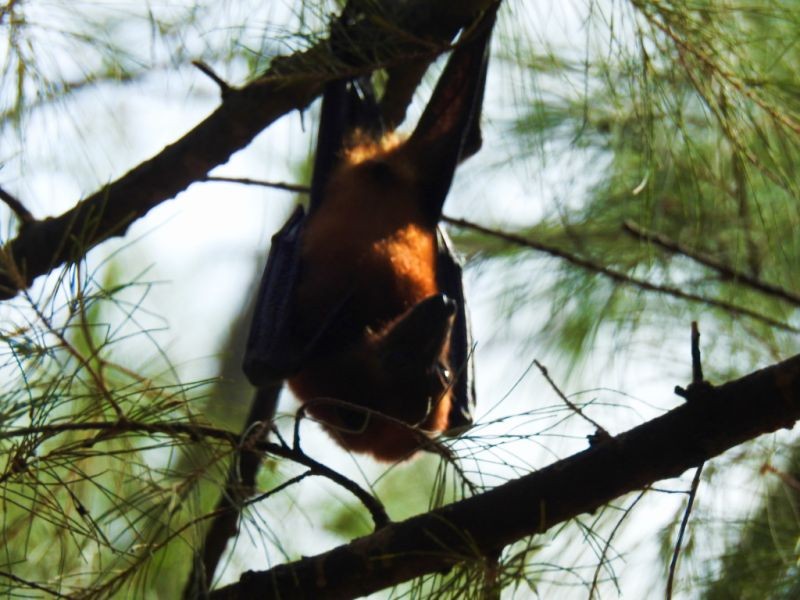
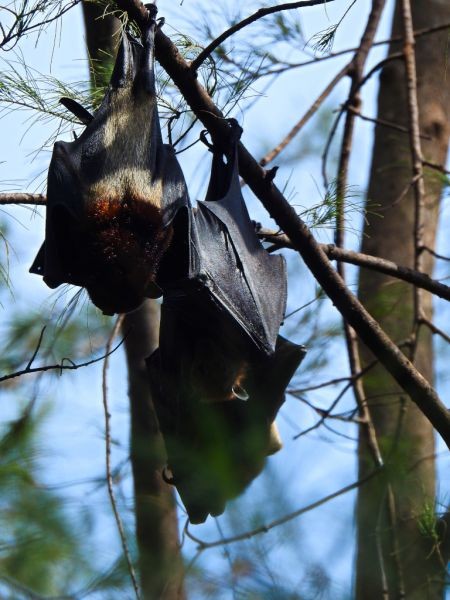
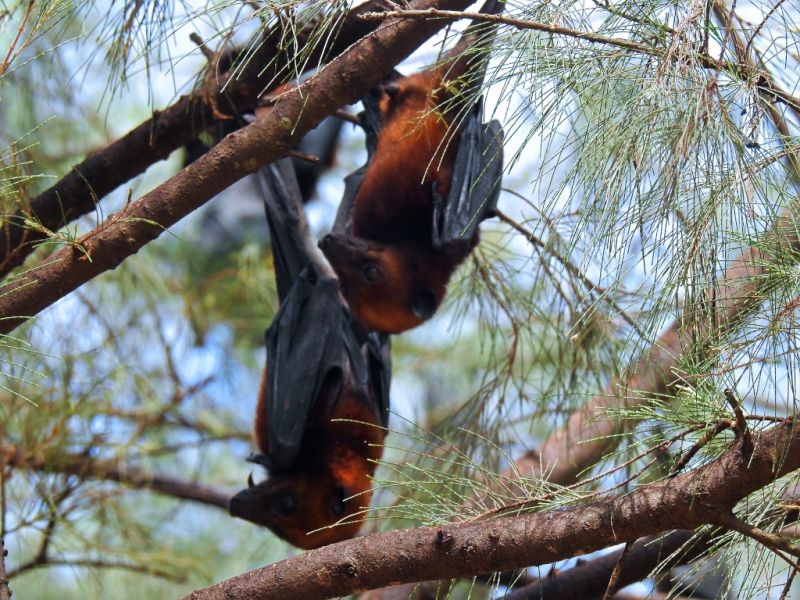
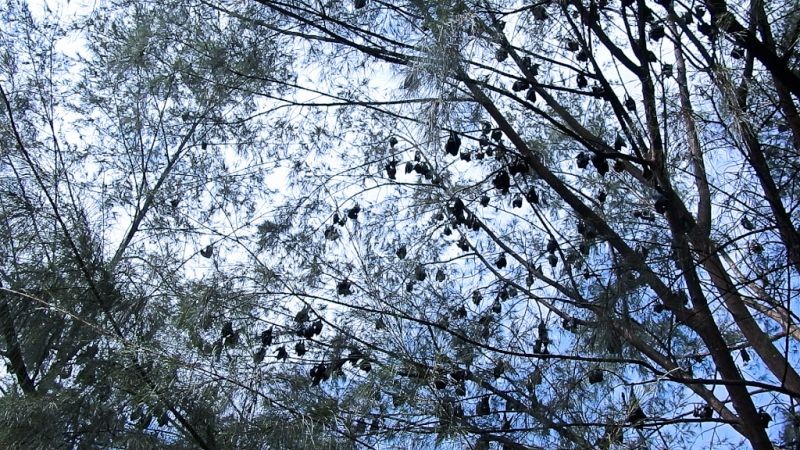
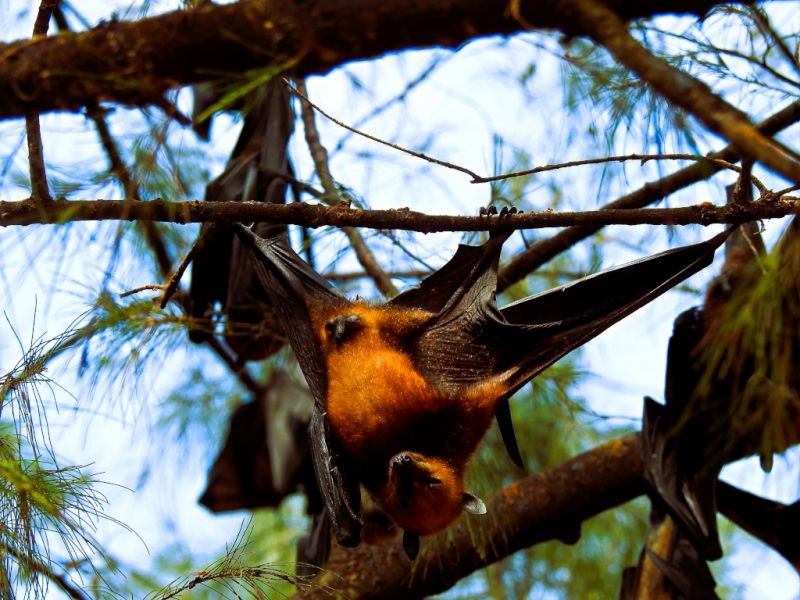
Although most people simply called them bats, they are actually Island Flying Foxes, a species of fruit bat. A colony of well over a hundred hung from the trees along the main road, chattering and squabbling noisily among themselves. Seeing so many gathered in one place was quite a sight.
These weren't tiny bats. They were surprisingly large, measuring roughly 12 to 15 inches in length, with impressive wings folded around their bodies as they rested. With their fox-like faces and large eyes, they managed to look both adorable and a little intimidating at the same time. It was one of those unexpected wildlife encounters that made wandering around Tioman even more memorable.
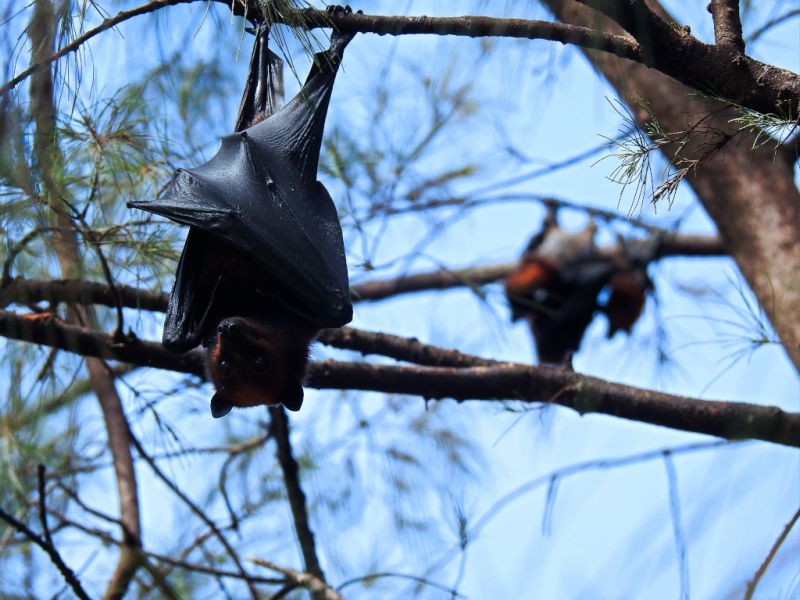
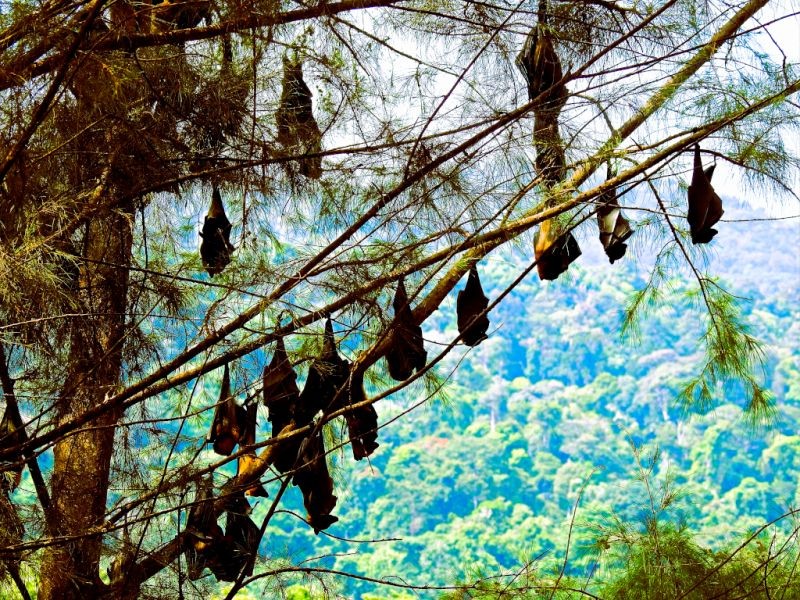
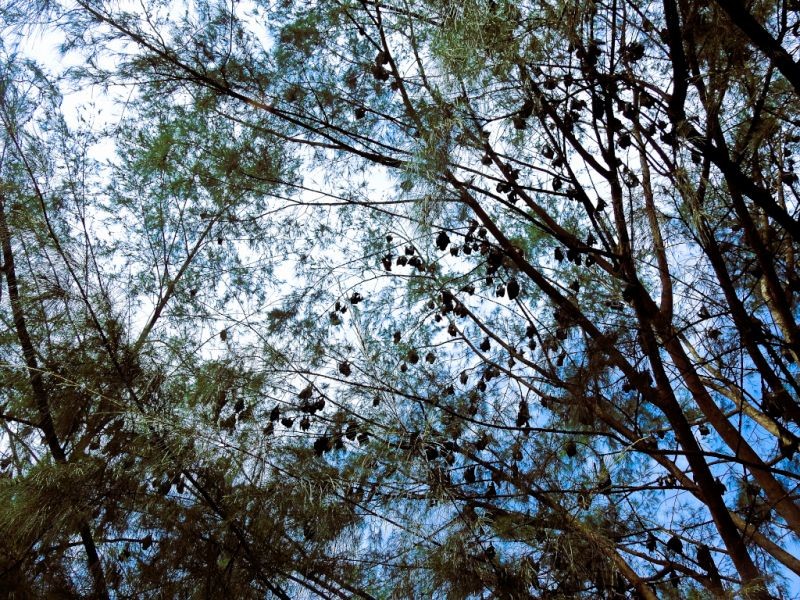
Satisfied after finally seeing the Flying Foxes, I made my way back toward the duty-free shop. As with most duty-free stores, some items felt like bargains while others weren't much of a deal at all. I picked up a large bottle of Molly's Irish Cream for about $20, along with some cookies and, of course, a little chocolate in honor of National Chocolate Day.
Unfortunately, my timing wasn't quite as good as my shopping. I arrived at the dock just in time to watch the tender pulling away. I had missed it by all of 90 seconds.
No worries. I found a shady spot, grabbed a chair, and settled in to enjoy the extra downtime. With some chocolate in hand and a beautiful view of the bay in front of me, waiting an hour for the next tender didn't seem like much of a hardship. Sometimes those unplanned pauses become part of the adventure.
That evening, the Odyssey raised anchor and departed Tioman Island. Our time in Malaysia had come to an end, and a new chapter of the voyage was about to begin.
Next stop: Thailand!
Travel Log for July 9th to July 13th, 2026
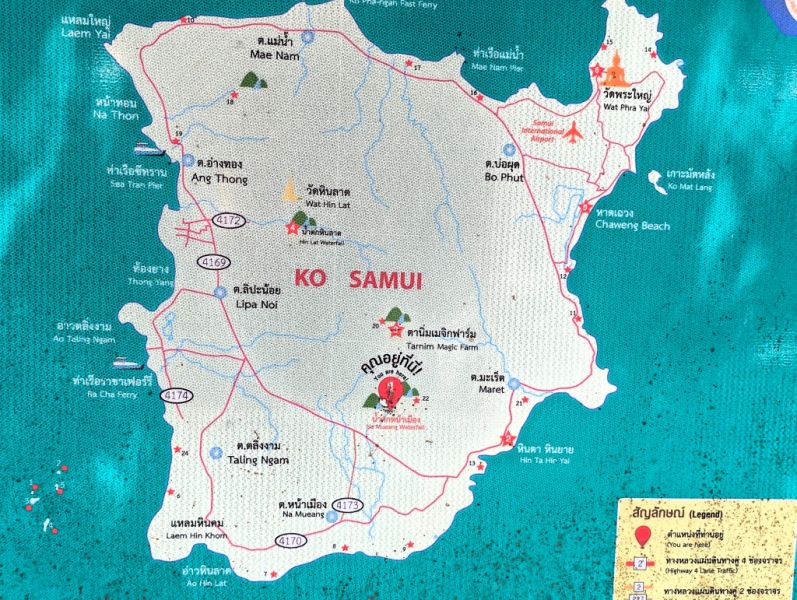
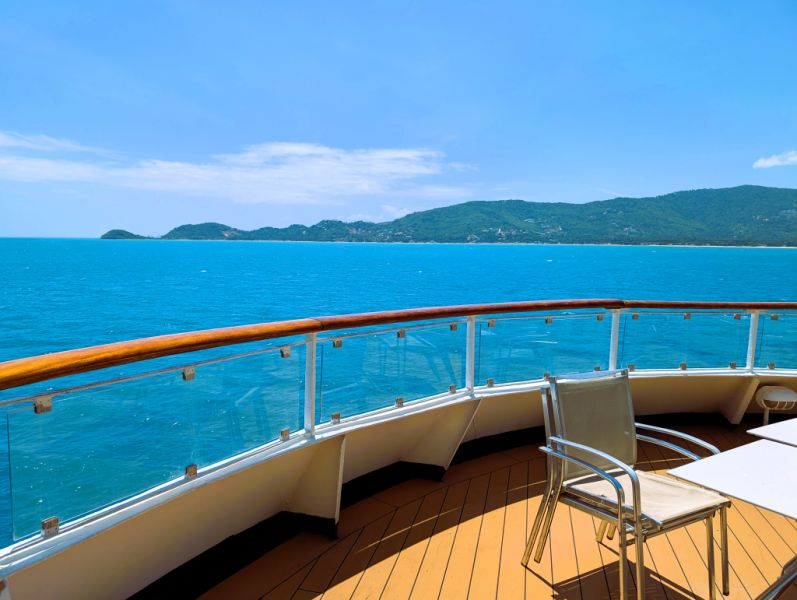
My days at sea settled into a familiar rhythm, with one notable exception, I was busy planning a shore excursion for our next port of call. On July 10, we arrived at Koh Samui, Thailand, a beautiful tropical island in the Gulf of Thailand and one of the country's most popular beach destinations. Adding to its appeal, Travel + Leisure recently named Koh Samui the #1 island in its Luxury Awards Asia Pacific 2026.
Since the Odyssey would be anchored in the bay for four days, I decided it was the perfect opportunity to explore the island in depth. I arranged a six-hour sightseeing tour that would take us around some of Koh Samui's most famous attractions and scenic locations.
The ship had partnered with a local tour company and was offering essentially the same excursion for $50 per person. After doing a little research, I found the identical tour on Viator for $26 per person, based on a group of six sharing a van. While the vans could accommodate up to nine passengers, bringing the cost down to around $17 per person. I preferred limiting our group to six. Anyone who has spent time in a small tour van knows how quickly things can feel cramped, and the extra space would make for a much more comfortable day exploring the island.
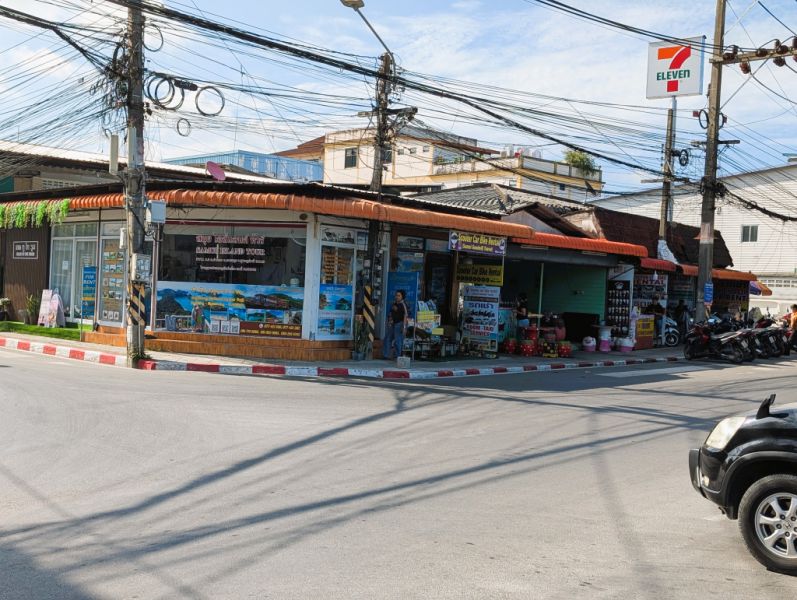
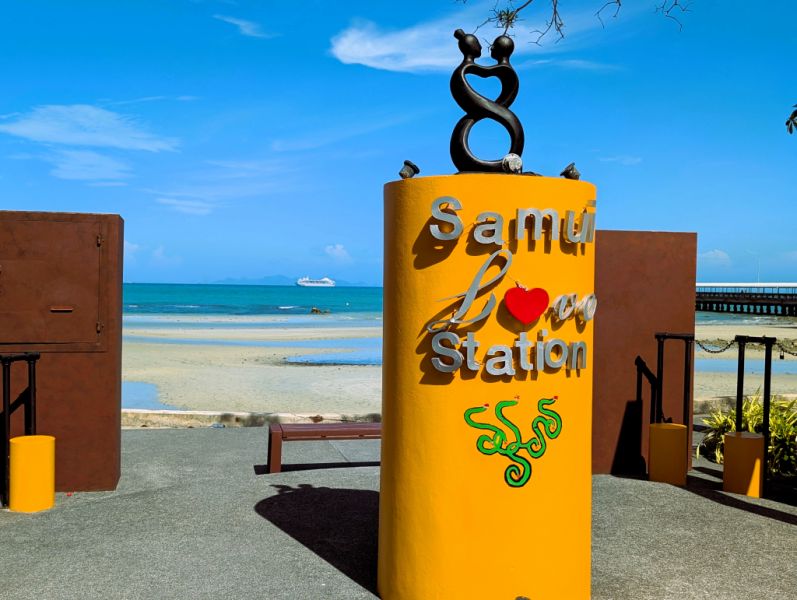
The tour included a private van and driver for six hours, allowing us the flexibility to explore wherever we wanted on the island. My original itinerary included stops at the Big Buddha Temple, Fisherman's Village, Hin Ta & Hin Yai Rocks, Na Muang Waterfalls, and Wat Plai Laem. After a little more planning, I decided to replace Fisherman's Village with a lunch stop, which I thought would make for a more relaxed and enjoyable day.
The response from fellow residents was overwhelming. Within just a few days, 17 people had expressed interest in joining the tour. The first six spots were filled on the very first day, but names kept piling up on a waiting list. Rather than disappoint everyone, I decided to book a second van.
It was a bit of a gamble on my part since I had to pay for the vans before collecting money from the participants. Fortunately, the second van filled quickly as well. Even after that, requests continued to come in. One resident was so eager to secure a spot that they sent payment before I had confirmed availability, and I eventually had to refund their money. By then, it was too late for me to arrange a third van, and I reluctantly had to turn away five additional people who wanted to join the excursion.
The downside to all of this planning and coordination was that I suddenly lost my primary way of communicating with everyone. Without a reliable messaging platform, I had no easy way to contact those interested in the tour or collect their payments. Fortunately, Connie stepped in and helped relay my messages to the group.
Most residents on the ship use WhatsApp to stay in touch. There are numerous groups centered around shared interests, and it's one of the main ways we learn about events and activities onboard. In fact, it was through these groups that I generated interest in the Koh Samui tour. Everything had worked flawlessly for more than four months, right up until the moment I really needed it.
Out of nowhere, WhatsApp began flagging my account for suspected spam. Each time it happened, I was locked out for about six hours while my activity was reviewed. Once my access was restored, I would be blocked again shortly afterward. In less than 48 hours, my account was suspended four separate times. With virtually no customer support available, it was an incredibly frustrating experience, especially while trying to organize a tour for a dozen people.
After a lot of trial and error, I finally discovered the culprit: a conflict with WeChat, the messaging app commonly used in China, which I had recently installed. As soon as I removed WeChat, the WhatsApp issues disappeared and everything returned to normal. Of course, that means I'll need to reinstall WeChat before we sail into China, but at least now I know what was causing the problem.
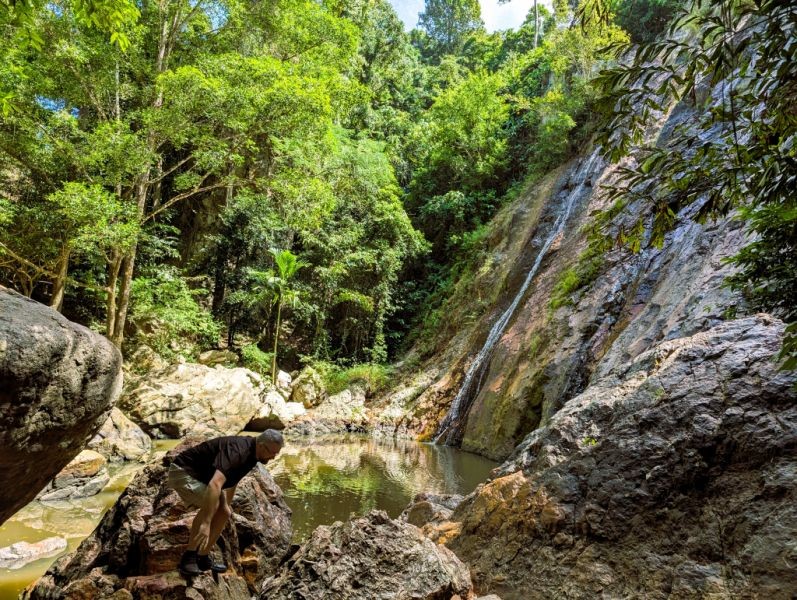
On Saturday, July 11, our group of twelve set out for a day of exploring Koh Samui. Our first stop was Na Muang Waterfalls. While the waterfalls weren't at their most dramatic, there was still enough water flowing to make the visit worthwhile, and the lush tropical setting provided a welcome change from the beaches and resort areas.
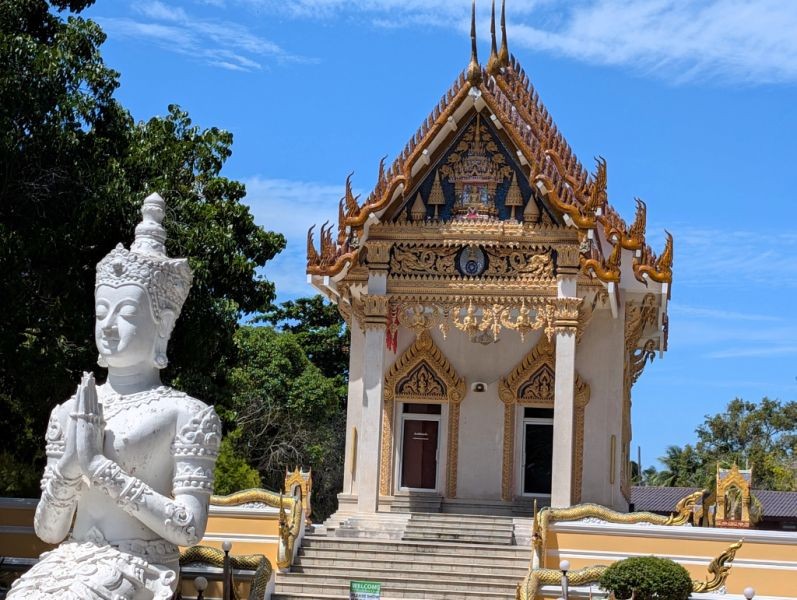
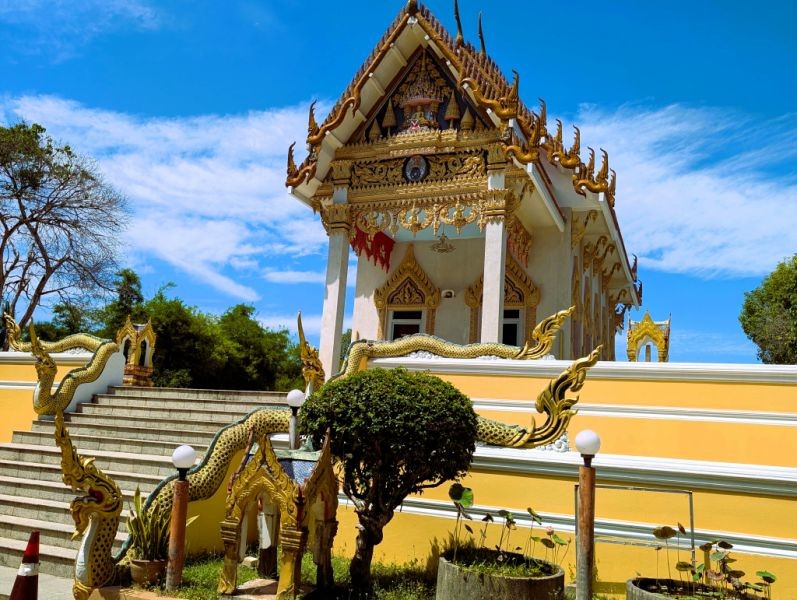
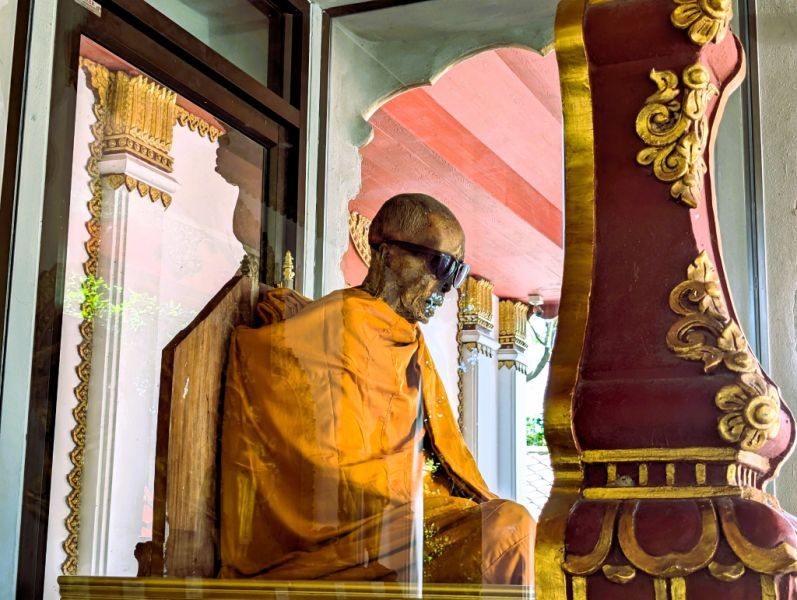
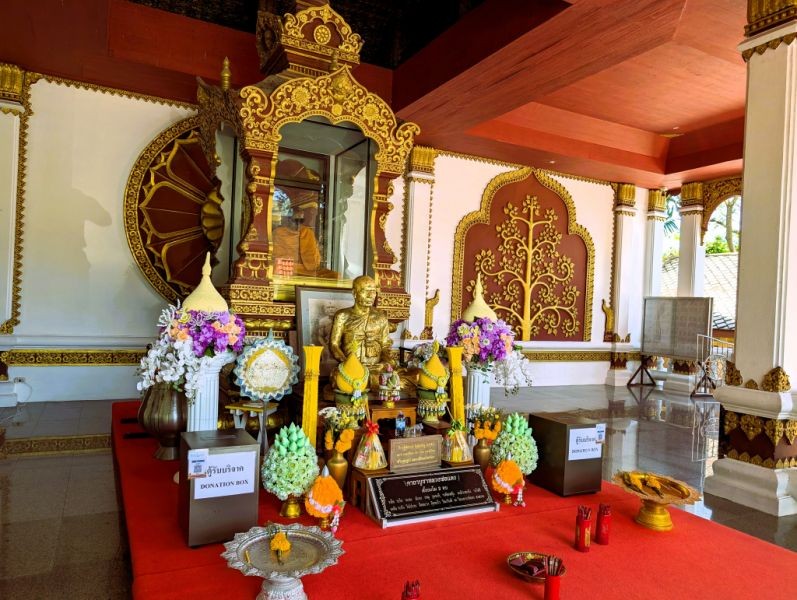
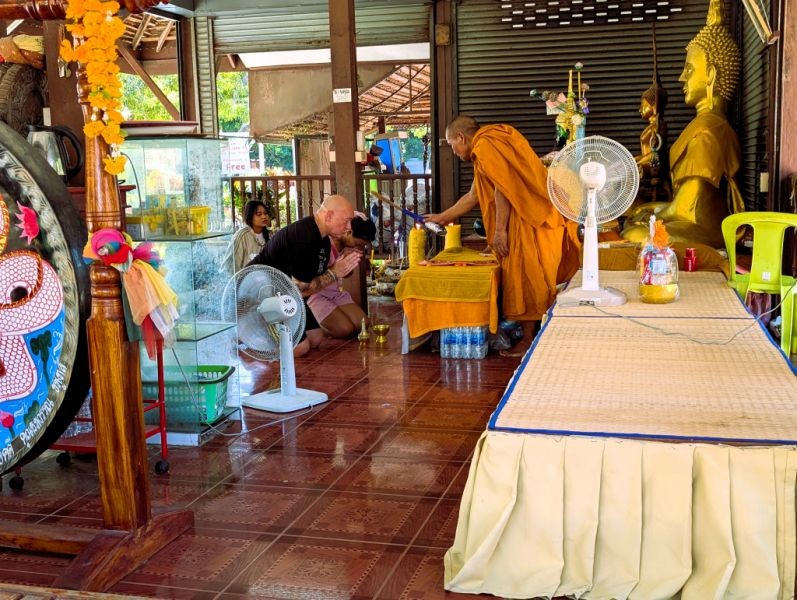
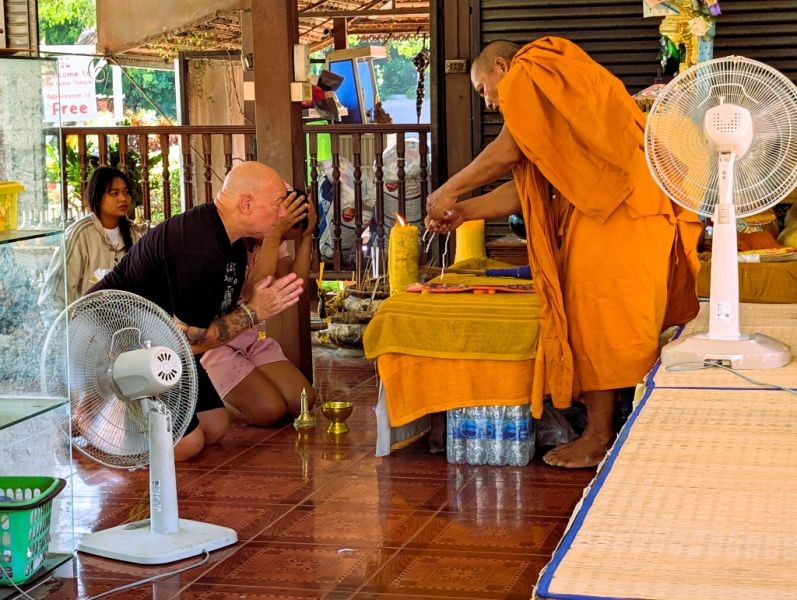
Our next stop wasn't originally on the itinerary, but since it was nearby and one of the island's most well-known attractions, we decided to visit Wat Khunaram, home of Koh Samui's famous for its mummified monk, Luang Pho Daeng was a respected Buddhist monk who passed away in 1973. Before his death, he requested that his body be displayed if it remained preserved, serving as a reminder of the Buddhist teaching that life is temporary and impermanent. Today, his body sits in a glass case within the temple, where visitors from around the world come to pay their respects. During our visit, I even received a blessing from one of the monks—a memorable experience and, hopefully, a little extra good luck for the journey ahead.
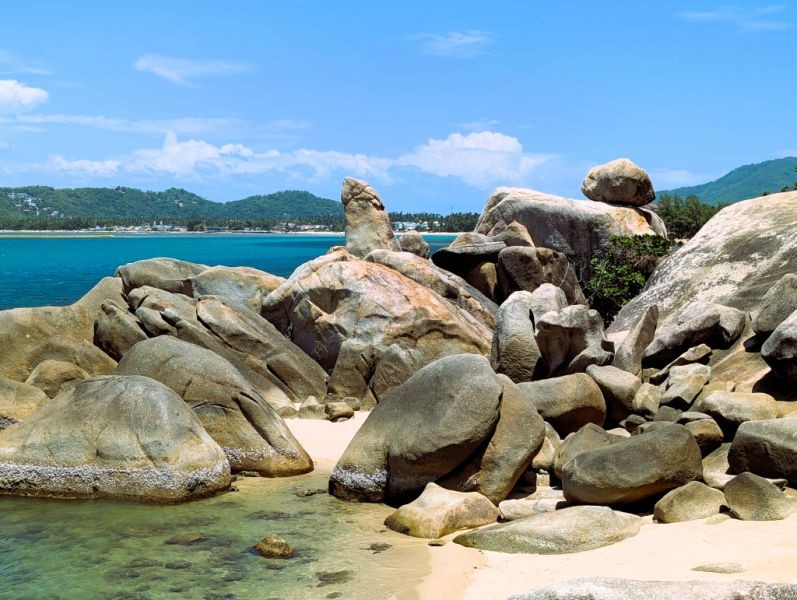
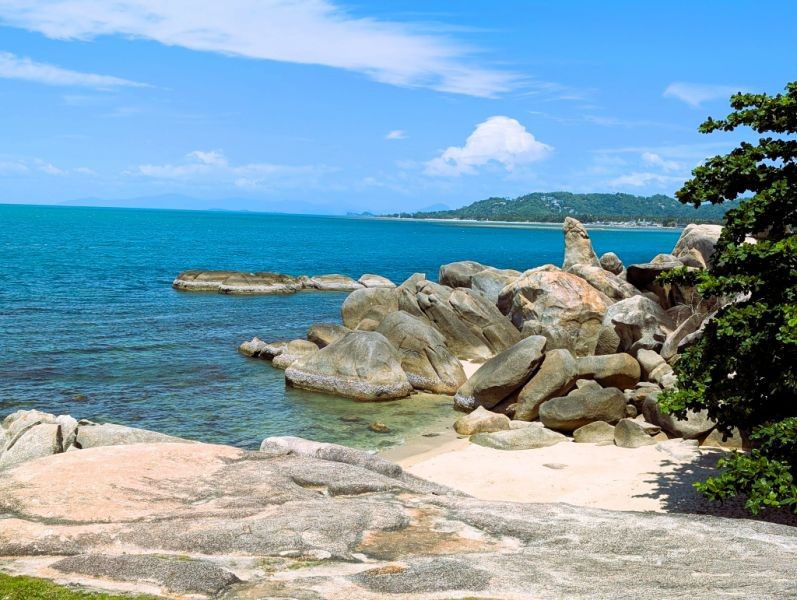
From there, we continued to Hin Ta and Hin Yai Rocks, better known as the Grandfather and Grandmother Rocks. Located along the coast near Lamai Beach, these unusual granite formations have become one of Koh Samui's most famous landmarks because of their striking resemblance to male and female anatomy. Local legend tells the story of an elderly couple who drowned at sea near this spot and were transformed into the rocks. While the folklore is interesting and the ocean views are beautiful, the area itself felt like one giant tourist trap, packed with souvenir stalls and visitors all trying to capture the same photos.
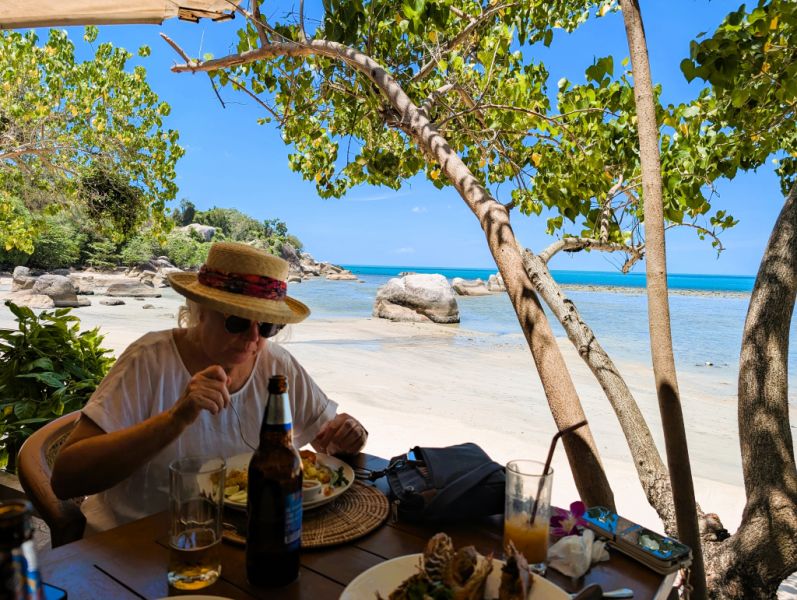
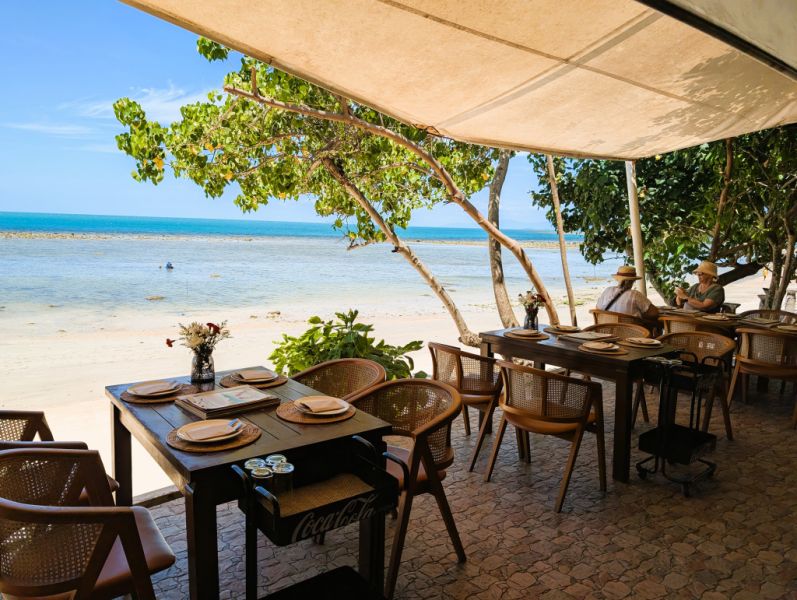
Just a short distance away was our lunch stop at Sabeinglai Restaurant, it turned out to be one of the highlights of the day. Nestled right on the beach, it offered a relaxing setting with beautiful ocean views and a welcome break from sightseeing. I decided to try Pad Thai with shrimp for the first time, along with a Tiger Beer, also a first for me. Both were excellent, and the entire meal cost only about $8 USD.
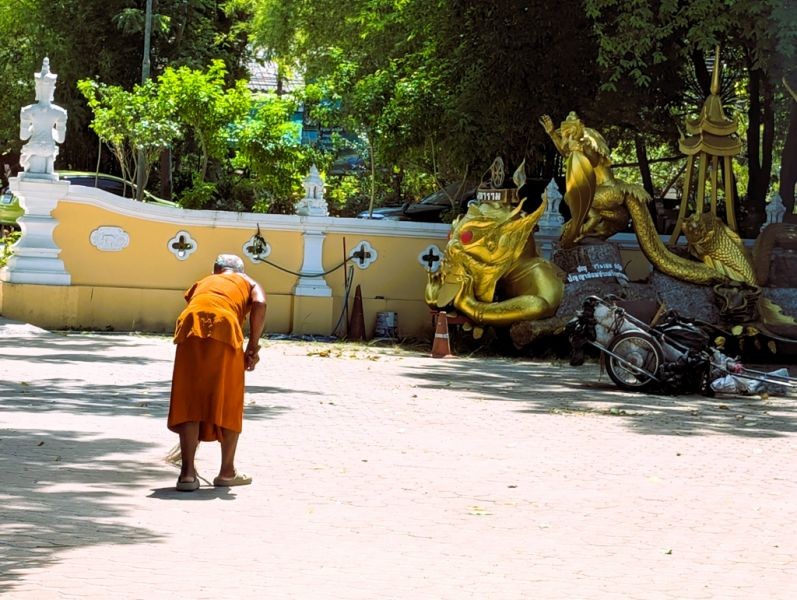
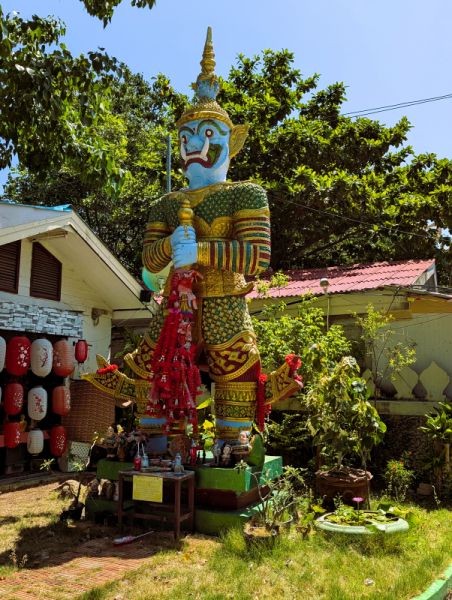
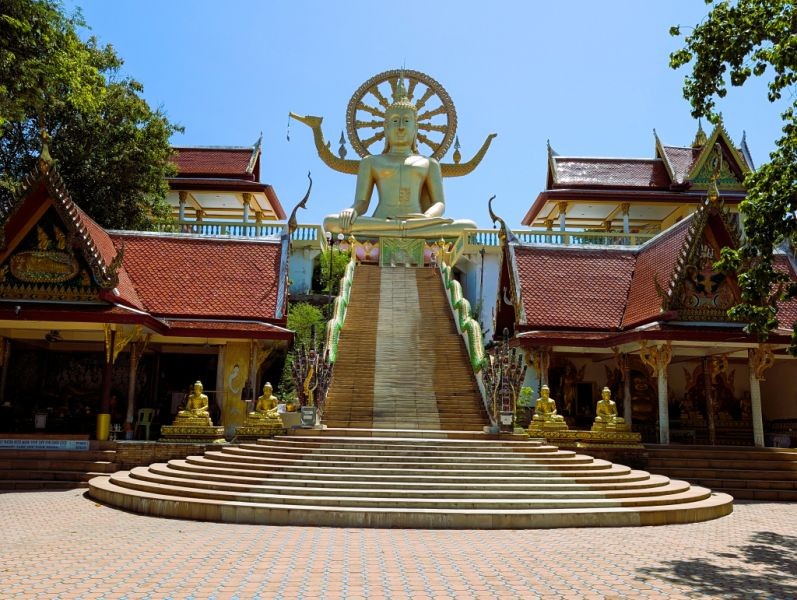
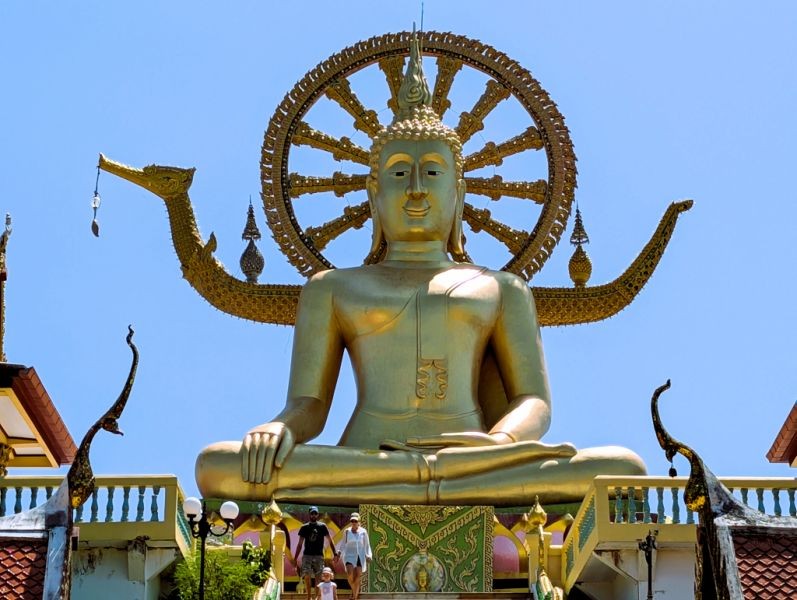
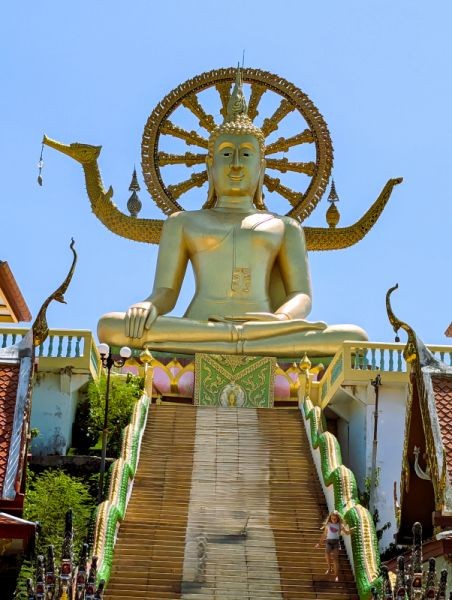
Although many of us aboard the ship are beginning to feel a little "templed out," we still find ourselves visiting some of the area's most famous religious sites. After lunch, we made our way to the Big Buddha Temple, one of Koh Samui's best-known attractions. The massive golden Buddha and the intricate temple decorations were impressive, but like many popular destinations, the area was surrounded by shops selling souvenirs, clothing, and food. I couldn't resist doing a little shopping myself and picked up a beautiful Thai dress shirt for 350 Thai Baht (about $10 USD).
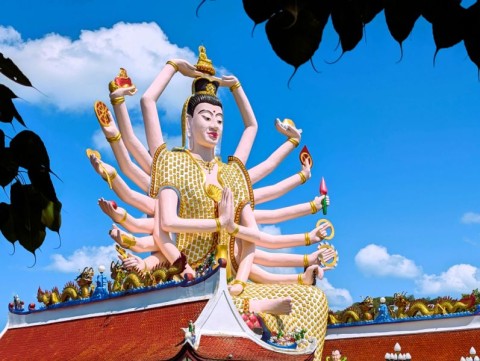
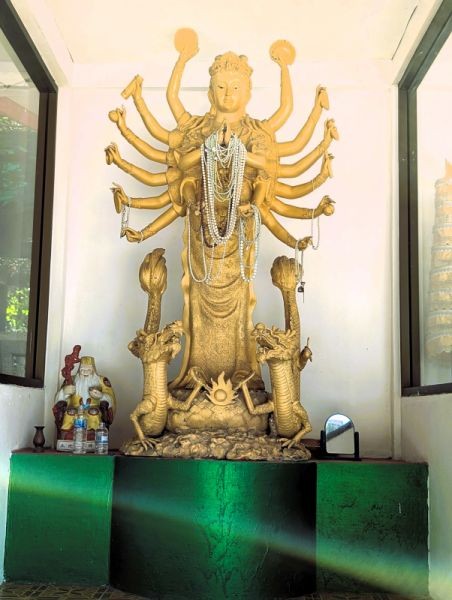
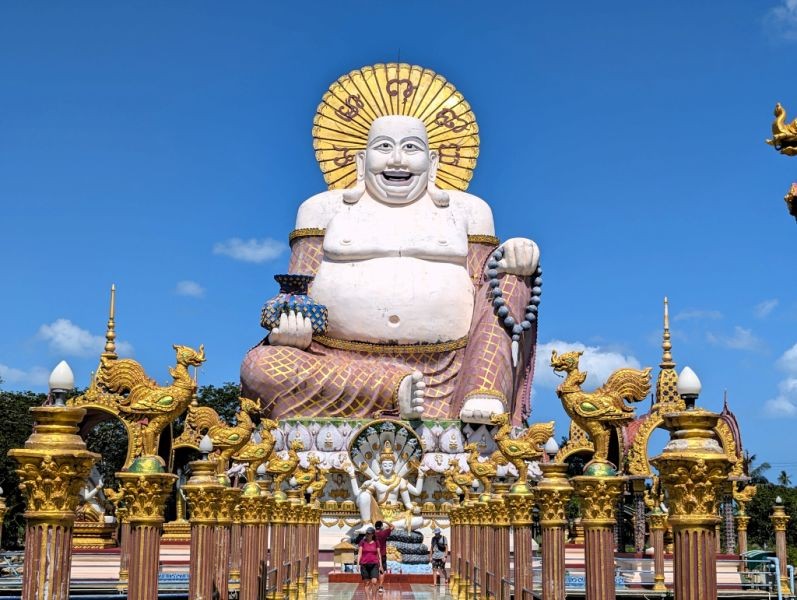
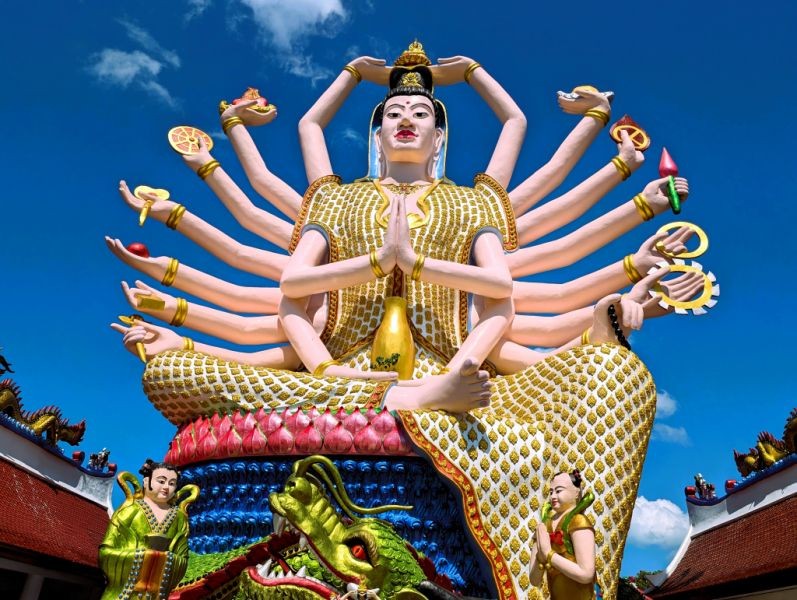
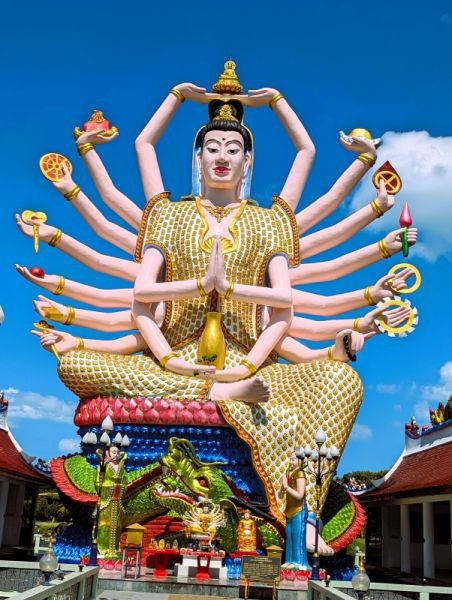
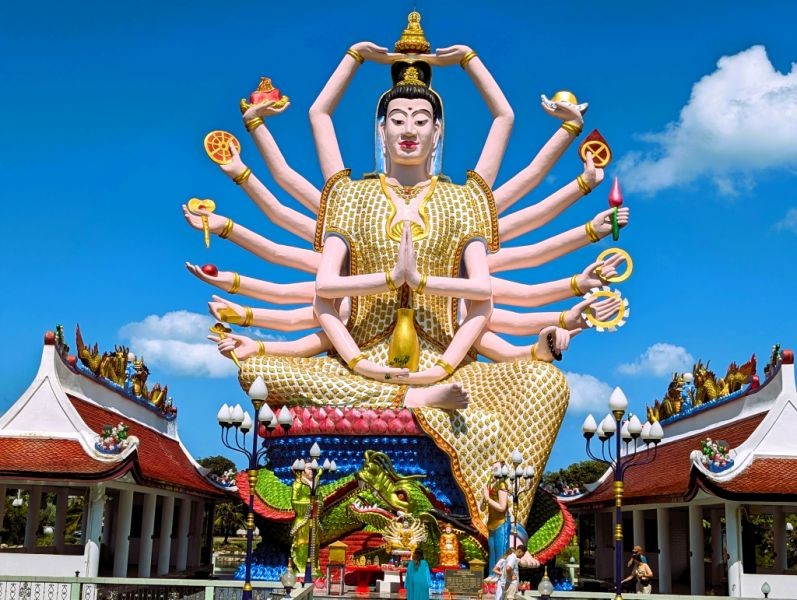
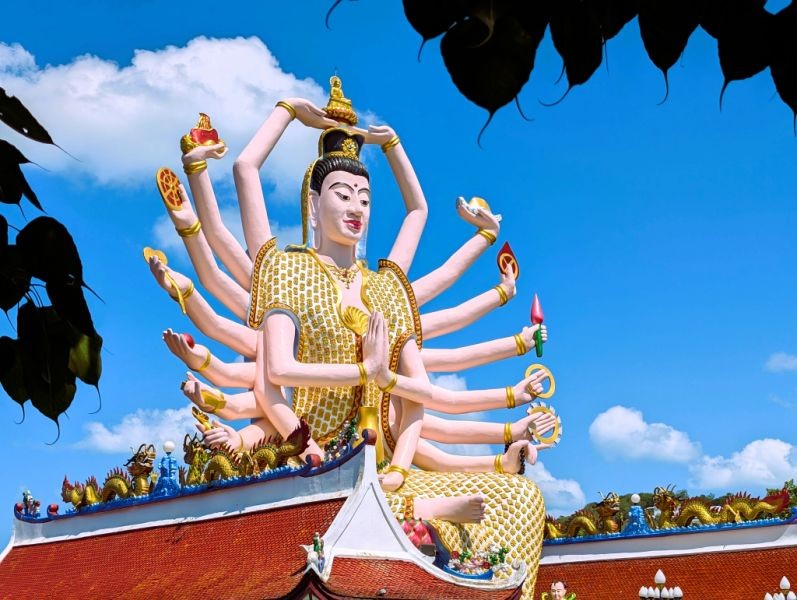
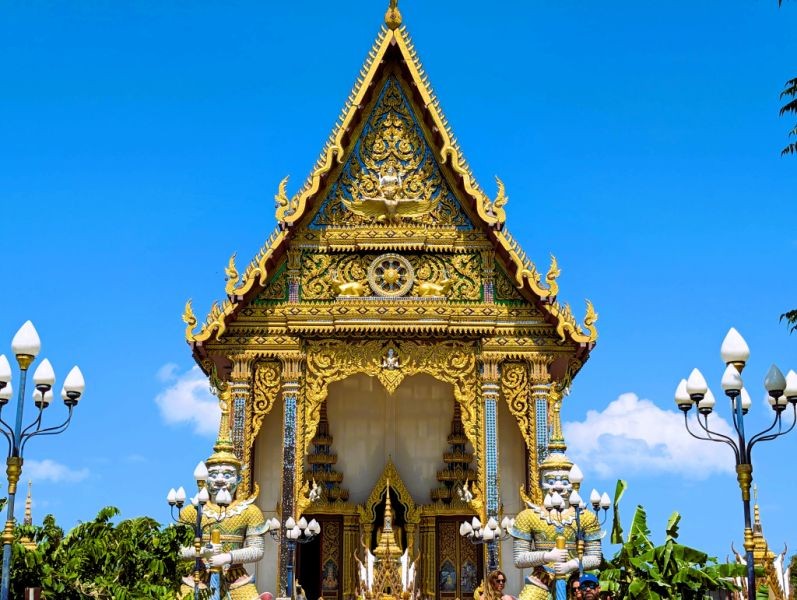
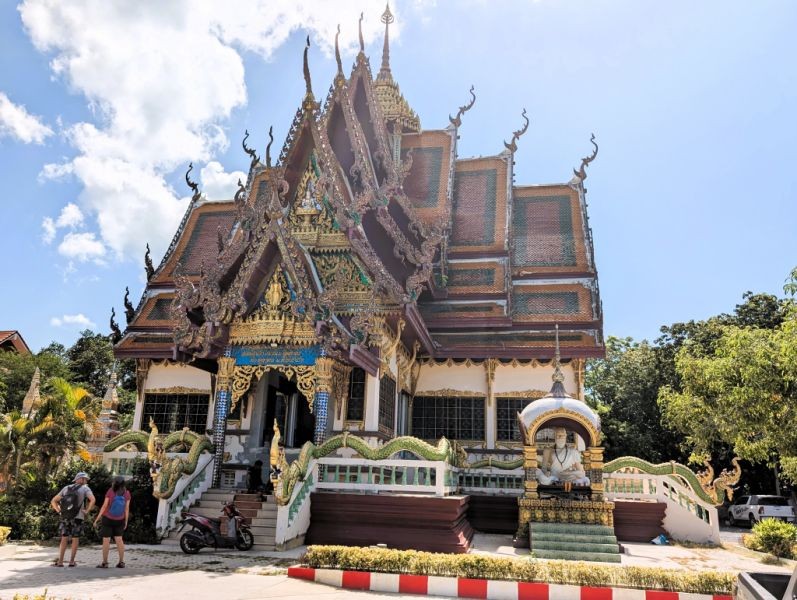
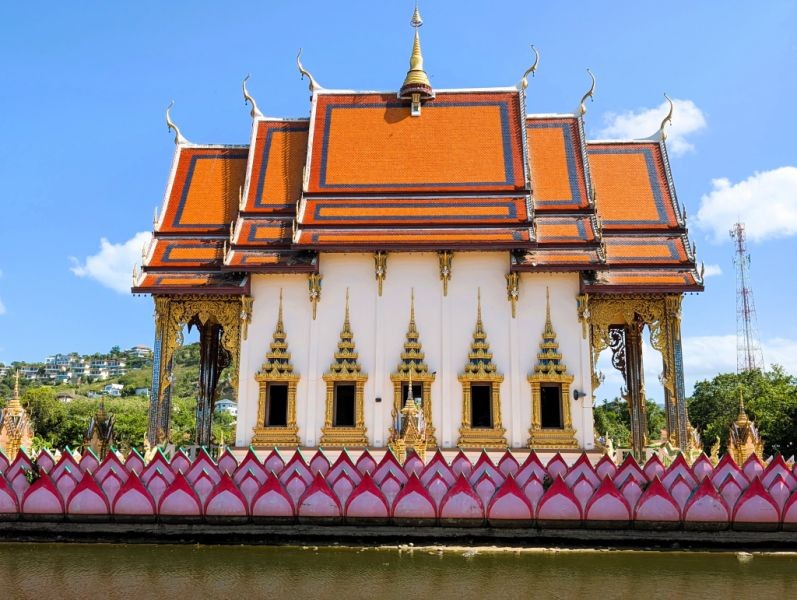
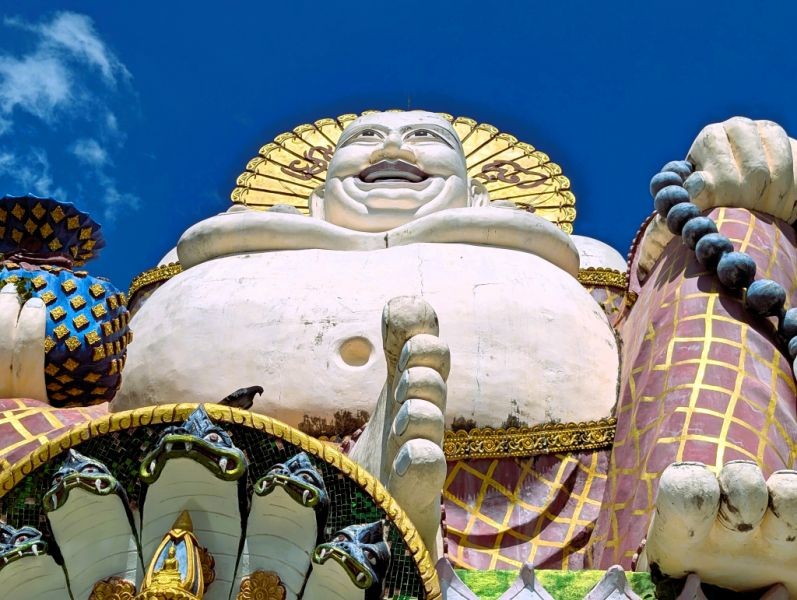
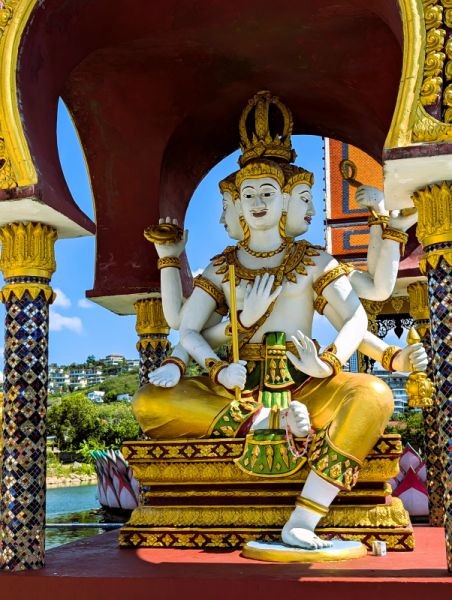
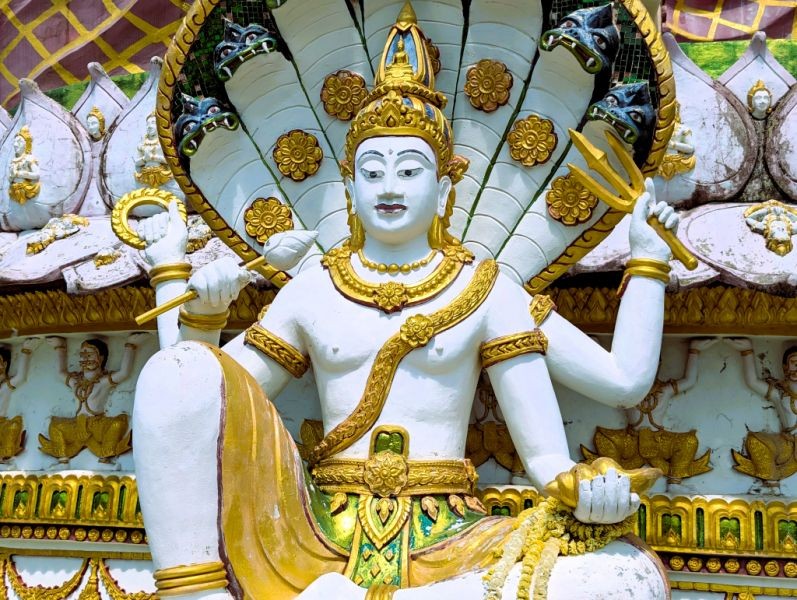
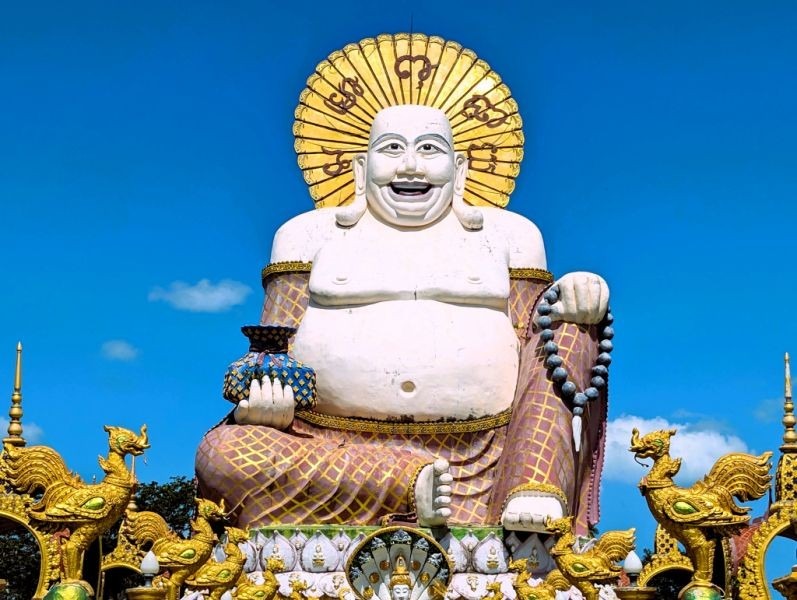
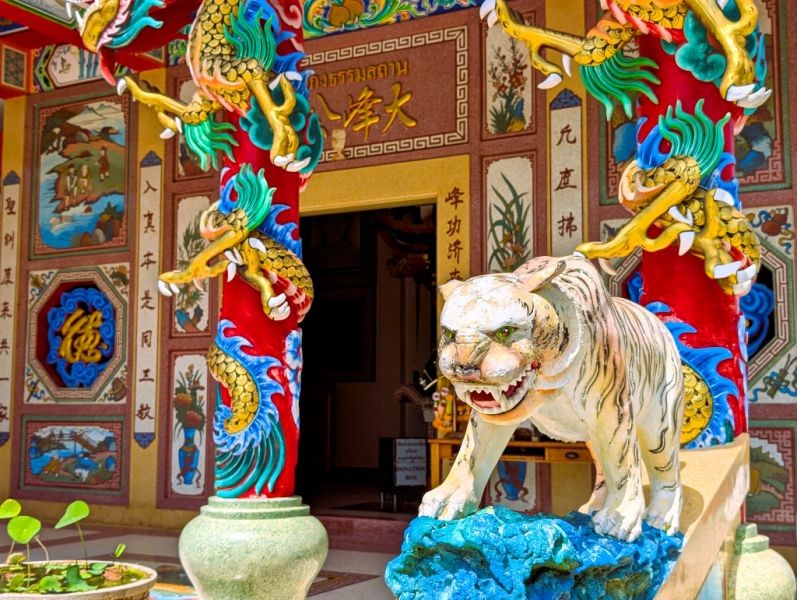
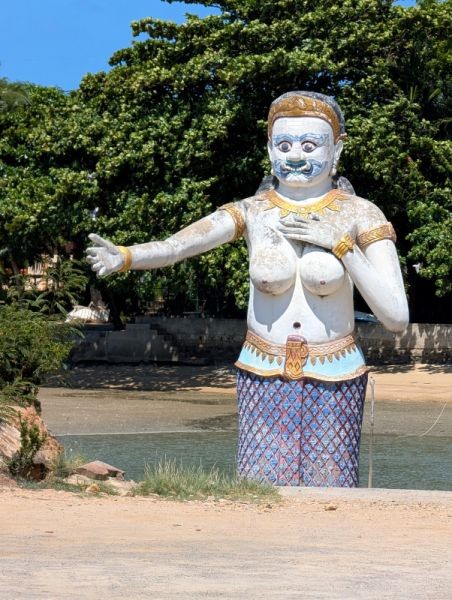
Our final stop of the day was Wat Plai Laem, located just a short distance from the Big Buddha Temple. This colorful temple complex is best known for its giant 18-armed statue of Guanyin, the Goddess of Mercy and Compassion, as well as a large white statue of Budai, the Happy or Laughing Buddha, a symbol of prosperity and joy. The temple grounds were especially attractive, with decorative walkways spanning a lake filled with enormous catfish. For just 10 Thai Baht (about 30 cents), visitors could purchase fish food and feed the seemingly endless schools of fish gathered around the platforms.
By this point, we had been touring the island for more than four hours and everyone was feeling the effects of the tropical heat. The passengers in my van voted to head back rather than continue on to Fisherman's Village, which was primarily another shopping and sightseeing area known for its older-style buildings and waterfront atmosphere. Since we were already on the opposite side of the island from where we had started, it was an easy decision. We settled in for the roughly 45-minute drive back to the pier, arriving in plenty of time to catch our tender back to the Odyssey.
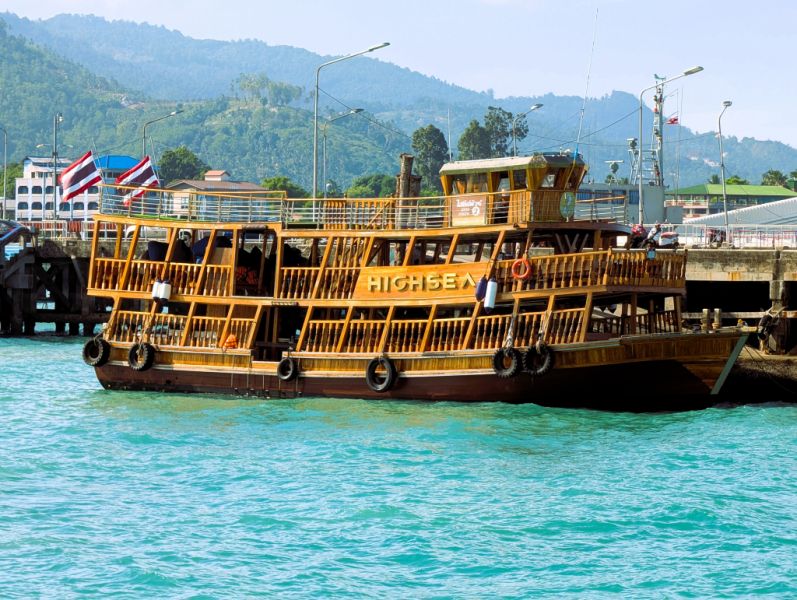
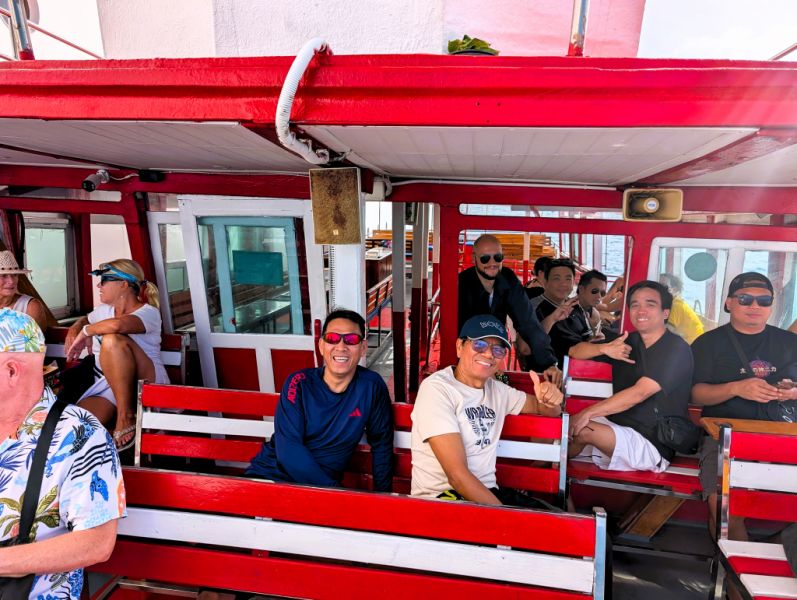
One aspect of visiting Koh Samui that never got any easier was the tender operation. Since there was no dock for the Odyssey, we relied on local boats to shuttle passengers between the ship and shore. These were older, wooden, double-deck passenger boats that looked as though they had seen many years of service. They weren't exactly confidence-inspiring, but they got the job done.
The real challenge came when the sea became even slightly rough. To safely load and unload passengers, the tender captains had to constantly maneuver their boats to stay alongside the ship. The boats were moving forward and backward with the swell, drifting side to side, and rising and falling with the waves, all at the same time. Boarding the ship required careful timing and coordination between the passenger, the tender crew, and the ship's deckhands. Most of the time, the process went smoothly.
Unfortunately, this was one of those times when it didn't.
An 85-year-old resident lost his footing while stepping from the tender onto the ship and fell into the narrow gap between the two vessels. It's about the worst place someone could end up, as the tender is continually bumping and scraping against the ship while both move with the waves. Thankfully, a deckhand reacted immediately, grabbing him and pulling him to safety.
The resident ended up waist-deep in the water and suffered a badly torn arm that was bleeding heavily. Given what could have happened, however, the outcome was remarkably fortunate. He escaped with bruises, cuts, and a heavily bandaged arm. Within a short time, he was back on his feet, walking around the ship, and sharing the story of his unexpected swim between the tender and the Odyssey.
On Sunday, July 12, I spent the day aboard the ship taking it easy and packing my bags. My time on the Odyssey was soon coming to a temporary end, as I would be disembarking the following day to begin the next chapter of my journey with Connie, our long-awaited adventure through China.
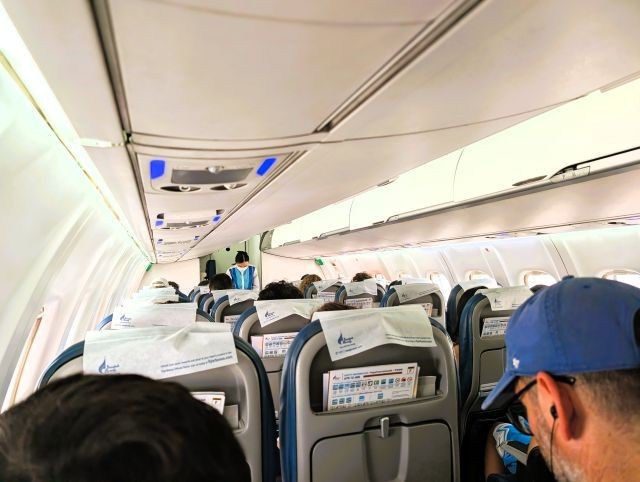
The plan is to fly first to Phuket, Thailand, where I would spend the night before continuing on to Hong Kong. Connie and I would meet there in a couple of days and begin exploring China together.
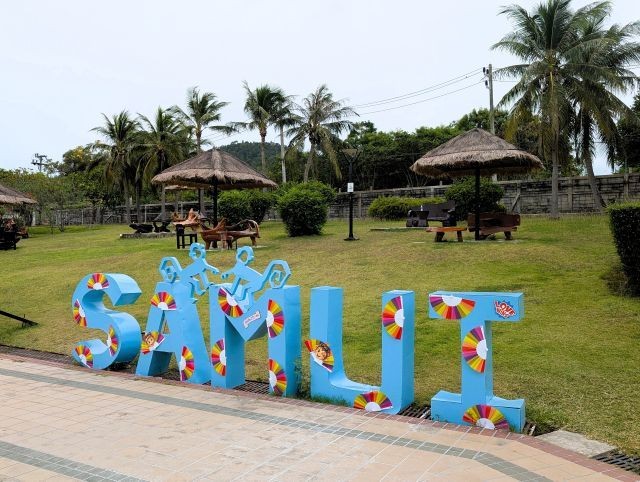
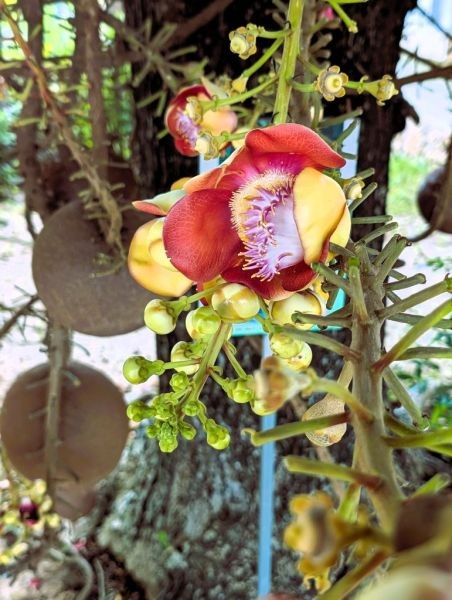
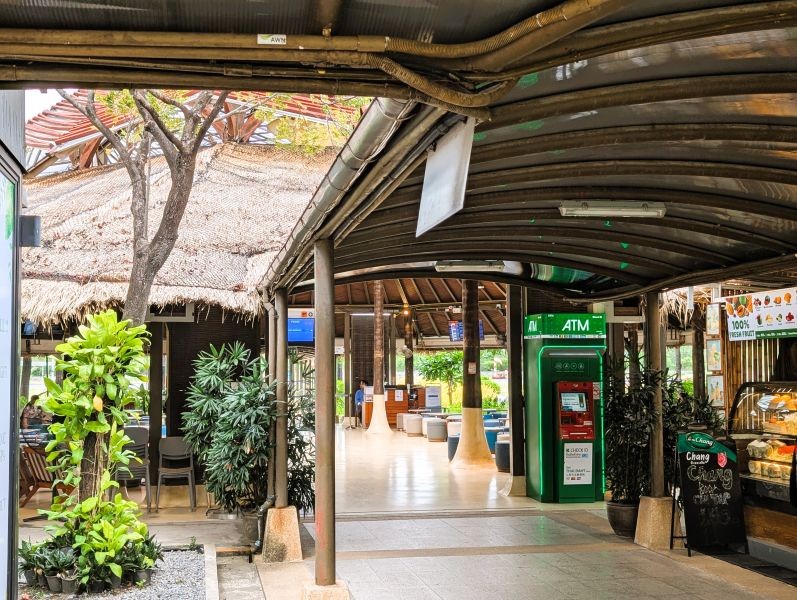
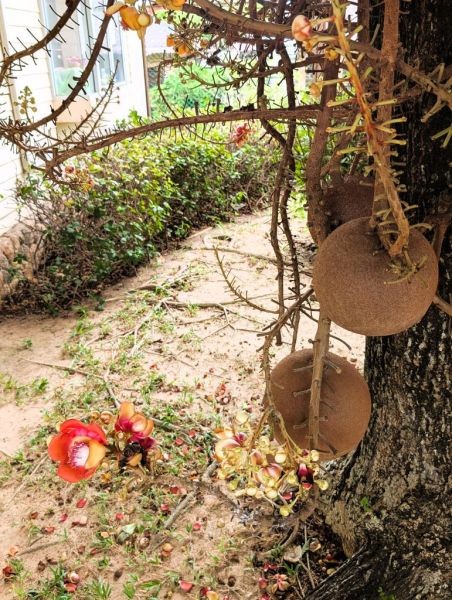
The Sumai Airport was interesting. It was mostly an outdoor complex. The waiting areas were in the grass with lounge chairs and small gazebos. The boarding gates were also open air, near the runways. The place was covered on a variety of plants and had ponds along the walkways. They had a tree I'd never seen before, called a "Coconut Tree". No, not a coconut palm tree, this was different with pretty flowers You also can't eat these "coconuts".
It's hard to believe how quickly the past few months at sea have gone by, but I'm excited for what comes next. New countries, new experiences, and undoubtedly a few unexpected adventures await.
Stay tuned—my next blog post will be coming to you from China!
Location (Map)
When you subscribe to the blog, we will send you an e-mail when there are new updates on the site so you wouldn't miss them.


Comments